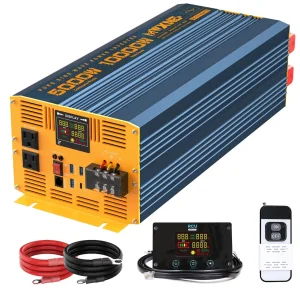
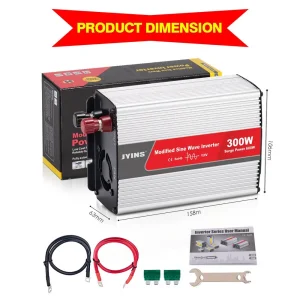
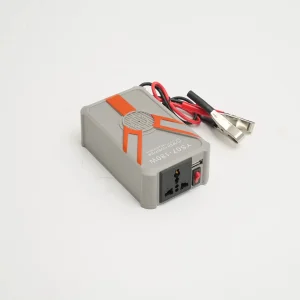
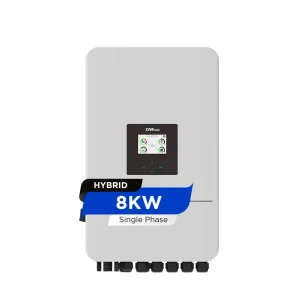
Explore our flagship industrial, hybrid, and pure sine wave power inverters engineered for high-performance grid-tied and autonomous solar energy deployments.
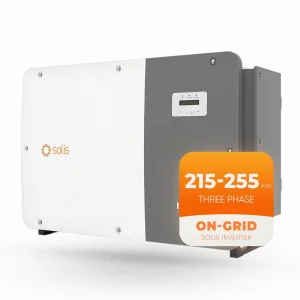
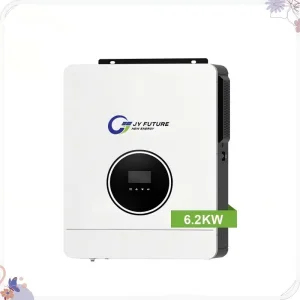
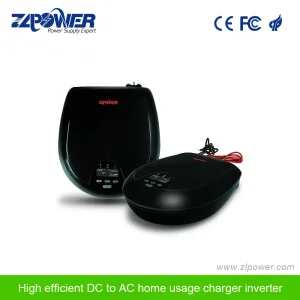
Modern commercial enterprises, sensitive industrial lines, and residential estates face unprecedented threats from extreme weather anomalies, grid aging, and energy transition volatility. True energy resilience is not merely having a backup system; it is the implementation of an active, self-regulating microgrid solution capable of instantaneous transition between grid-tied and autonomous island modes.
At the center of this autonomy is the power inversion topology. Modern power topologies must manage bidirectional power flows with high efficiency, handle complex reactive power profiles, and perform fast-switching dynamics without causing phase or voltage disruptions. Our solutions leverage advanced power electronics design, combining low-frequency ruggedness with high-frequency efficiency to guarantee power continuity under severe grid fault conditions.
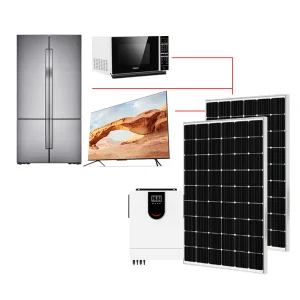
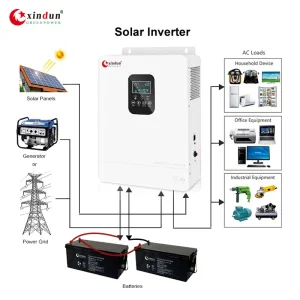
By integrating multi-source inputs—such as photovoltaics (PV), energy storage systems (ESS), and diesel generator inputs—our smart hybrid systems provide a reliable energy architecture that insulates operations from rising electricity costs and random grid failures.
Our solutions transition from grid-following to grid-forming systems, establishing independent voltage and frequency references for complete off-grid reliability.
Ensuring Clean Power Delivery with Total Harmonic Distortion (THD) under 3%, protecting sensitive laboratory equipment and industrial PLCs.
High-efficiency power conversion architectures are changing. Modern global sites require specific hardware criteria to meet performance and efficiency goals.
Low-frequency transformer-based topologies utilize massive heavy-duty copper iron cores, providing exceptional surge handling capacity and galvanic isolation. This is ideal for inductive industrial loads. High-frequency inverters leverage fast switching semiconductors to minimize weight and footprint, optimized for telecommunications and light commercial usage.
Modern smart systems monitor dynamically changing power variables from grid tariffs, PV output, battery state-of-charge (SoC), and critical load levels. The system executes real-time algorithms to optimize LCOE (Levelized Cost of Electricity) through peak shaving, load shifting, and dynamic battery utilization.
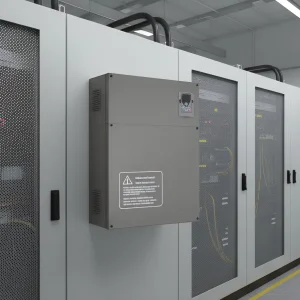
Operating in harsh industrial and outdoor environments requires robust ingress protection. Outdoor modular systems feature IP54 to IP65 enclosures, employing advanced heat-dissipation techniques such as direct liquid cooling or sealed heat pipes to guarantee stable continuous output at 50°C ambient temperatures.
*Data based on comparative industrial analysis of power electronics manufacturing clusters in Southern China versus regional European hubs.
Guangzhou, as a primary hub of China's power electronics corridor, provides a complete ecosystem for high-power system fabrication. From raw silicon processing and MOSFET fabrication to copper winding and high-density PCB layout manufacturing, every step of the supply chain is localized. This proximity reduces transit latency for raw components, allowing us to source and assemble with efficiency and quality control.
This localized cluster allows HanFong to pass significant cost savings to our clients while accelerating research and development. A customized engineering change note (ECN) on a hybrid solar inverter can be simulated, prototyped, verified, and placed on the assembly line within a fraction of the time required by Western manufacturers.
Additionally, the proximity to primary shipping ports in Guangzhou and Shenzhen ensures fast logistics for marine and air freight, enabling predictable delivery schedules for critical infrastructure projects globally.
An audit manufacturer specializing in durable grid-tied, off-grid, and hybrid power management components since 2013.
Guangzhou HanFong New Energy Technology Co., Ltd. is an audited manufacturer of all types of power inverter and solar charge controller products. Our factory has been a leader in electrical products since 2013. Specializing in DC to AC power inverters and located in Guangzhou City of China, we provide convenient transportation access by air and sea. With dedicated research and development and strict quality control, our products have gained recognition and praise across diverse international markets.
Our power inverters are widely utilized in off-grid solar systems, residential micro-grids, and industrial automation networks. We focus on the operating efficiency and durability of our products. With a 5,000 square meter factory and 150 proficient employees, we are equipped to handle demanding OEM and ODM configurations. We comply strictly with European quality standards, and our products have earned CE and RoHS certifications.
We mainly manufacture those items to the market: North America, Europe, Africa, South America, Middle East, and Asia, and have full experience in OEM service. We have full confidence in achieving your required quality levels and providing a reliable sourcing partnership for your business.

Deploying electrical systems internationally requires compliance with grid interconnection codes, safety directives, and environmental regulations.
Essential for integration into European grid networks. Compliance with EN 50549-1/2 ensures our inverters meet specific under-voltage, over-voltage, frequency deviation ride-through (LVRT/HVRT), and active power reduction requirements.
Critical for the North American markets. Certification under UL 1741 SB guarantees smart inverter functions, including interoperability protocols, phase-angle jump ride-through, and safety shutdown mechanisms during grid anomalies.
Ensuring all electronic sub-assemblies, lead-free solder pastes, and heat sinks comply with the Restriction of Hazardous Substances Directive, protecting human health and the environment during lifecycle disposal.
Different environments present unique operational challenges. Here is how our inverter topologies perform across primary B2B and consumer installations.
Industrial machinery, high-power water pumps, and refrigeration compressors present huge inductive inrush currents during startup—often 5 to 7 times their nominal running current.
Our low-frequency transformer-based inverters feature heavy copper windings that absorb these electrical surges, preventing system protection shutdown and ensuring continuous operation.
Remote cabins, rural developments, and telecommunication tower installations require continuous power without a reliable grid connection.
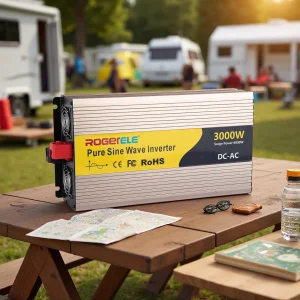
Using a hybrid configurations with integrated MPPT solar charge controllers, our systems manage battery charge cycles while providing clean, stable pure sine wave AC power directly to home appliances.
Providing power on the road requires compact, highly efficient power conversion designs that withstand constant vibration and thermal fluctuation.
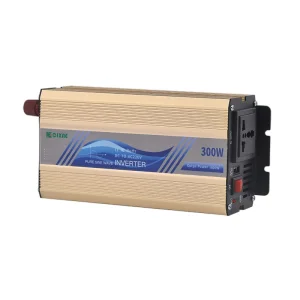
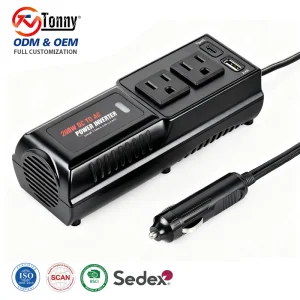
Our range of modified and pure sine wave car inverters convert 12V/24V DC battery power into stable 110V/220V AC, enabling travelers and fleet operators to run tools and appliances safely.
Detailed technical answers to common engineering, procurement, and system integration questions.
A pure sine wave inverter produces a smooth utility-grade output with minimal harmonic distortion (typically THD < 3%). This is required for sensitive electronics, inductive loads, medical machinery, and variable speed motors. A modified sine wave inverter outputs a stepped wave that approximates a sine wave. While cost-effective, it may cause humming, electrical noise, or higher operating temperatures in inductive or sensitive loads.
Low-frequency inverters utilize large toroidal or EI transformers that provide galvanic isolation between the DC battery input and AC output. This topology offers high peak surge capability (frequently up to 300% of nominal rating for several seconds), allowing it to start heavy machinery and inductive loads without damaging semiconductor switches.
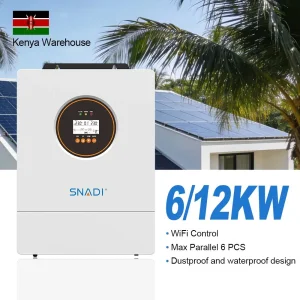
Hybrid inverters utilize intelligent digital signal processors (DSP) to orchestrate power pathways between solar panels, battery banks, the utility grid, and local loads. Using dynamic algorithms, they prioritize solar power to run local loads, store excess solar energy in the battery, and draw power from the grid or start a backup generator only when solar output and battery charge fall below defined thresholds.
The primary factor affecting inverter longevity is thermal stress, followed by input voltage spikes and humidity. To maximize lifespan, ensure proper ventilation, perform routine inspections on connection terminals, and install appropriate DC and AC surge protective devices (SPDs). Our design uses premium capacitors and optimized thermal pathways to reduce interior temperatures and extend operational life.
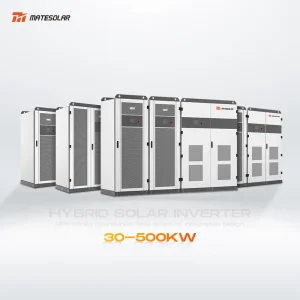
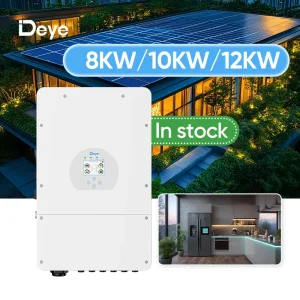
Explore our hybrid and specialty power conversion systems built for commercial scaling and off-grid utility infrastructure.
Connect with HanFong engineers to specify your project electrical criteria, get bulk OEM quotations, or schedule a technical review.
 Sriram Electricals