Select premium string and hybrid solar inverters configured for regional compliance and high-performance operation in the Southern African grid environment.
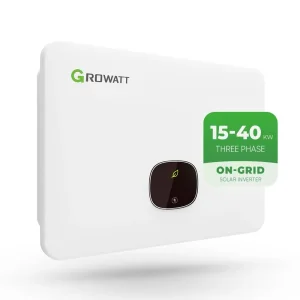
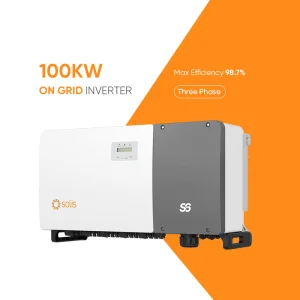
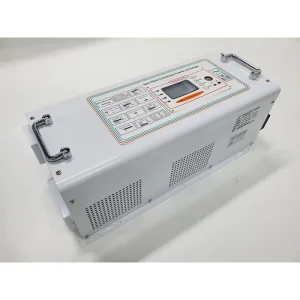
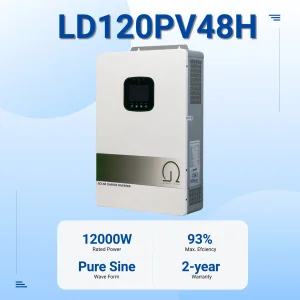
Namibia exhibits some of the highest solar irradiation profiles globally, averaging over 3,000 hours of sunshine per year and Global Horizontal Irradiation (GHI) values exceeding 2,200 kWh/m² in arid zones. Driven by Namibia's National Renewable Energy Policy and the urgent need to reduce heavy dependency on imported electricity via the Southern African Power Pool (SAPP), utility operators, commercial entities, and agricultural developers are aggressively expanding decentralized power systems.
Integrating grid-tied photovoltaic infrastructure under the jurisdiction of regional electricity distributors (REDs)—such as Erongo RED, Cenored, Nored, and the City of Windhoek—requires robust power generation technology. High-quality grid-tied inverters act as the nervous system of this transition, ensuring that extreme solar energy yields are reliably fed back into the local distribution grid while maintaining thermal stability in the face of brutal desert heat.

Operating electrical architecture under extreme conditions demands design elements that generic PV systems fail to provide.
Ambient temperatures in Namibian mining locations and agricultural farms regularly surpass 45°C. Standard solar inverters suffer massive power losses due to early thermal derating. Our specialized systems utilize advanced aluminum heat-sinks, intelligent variable-speed cooling fans, and high-frequency Silicon Carbide (SiC) MOSFETs to sustain peak output curves without thermal degradation.
Microscopic dust from Kalahari sandstorms is highly abrasive and electrically conductive. Standard cooling designs expose circuits to catastrophic failures. We employ dual-chamber thermal zones with IP65-rated enclosures, keeping all critical power processing modules isolated from surrounding atmospheric pollutants.
Long feeder lines in Namibia's rural expanses run high risk of voltage drops and line impedance fluctuations. Our inverters feature integrated dynamic grid support, providing low-voltage ride-through (LVRT), active reactive power control, and customizable protection thresholds to match local utility requirements.
Adapting to modern decentralized solar frameworks with smart integration and intelligence layers.
INTELLIGENT ENERGY MANAGEMENT
The technological progression of grid-tie PV generation in Southern Africa points toward high-power hybrid architectures. Although pure grid-tie setups offer the lowest levelized cost of energy (LCOE), integrating battery backups provides crucial insurance against utility load shedding.
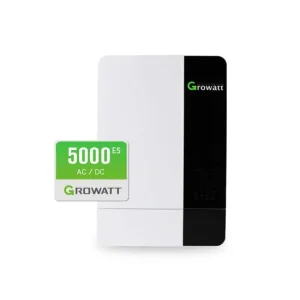
Our R&D roadmap prioritizes the deployment of hybrid systems equipped with bidirectional MPPT capabilities, high-speed automated transfer switches (<10ms), and direct bus communication protocols (CAN/RS485) designed to integrate with modern Lithium Iron Phosphate (LiFePO4) storage arrays. Additionally, smart microinverters are finding rapid uptake in rooftop installations due to safe, low-voltage DC inputs and modular scaling advantages.
How our advanced manufacturing system secures supply chain reliability and cost-competitive engineering output.
Guangzhou HanFong New Energy Technology Co., Ltd. has established itself as an audited manufacturing leader in inverter and solar controller technologies since 2013. Specializing in high-performance DC to AC conversion architectures, our state-of-the-art facility is located in Guangzhou, China, offering direct access to premium shipping links via international air and deep-water ports.
Operating out of a 5,000 square meter factory floor, we employ over 150 skilled staff, including dedicated engineering experts who direct our OEM and ODM programs. Our production lines feature automated wave soldering, surface-mount technology (SMT), automated optical inspections (AOI), and full-load burn-in systems that expose every unit to high-stress climate test parameters before shipping.
We build our units to international standards, obtaining CE and RoHS compliance markers to ensure seamless import processes. We service major target markets in North America, Europe, Africa, South America, the Middle East, and Asia, proving our capacity to manufacture reliable solar components that satisfy diverse regulatory expectations worldwide.
Answering technical, electrical, and regulatory installation questions regarding grid-tie solar systems in Namibia.
In Namibia, grid connection is governed by the national Net Metering Rules issued by the Electricity Control Board (ECB) alongside the local utility NamPower or regional distributors (like Erongo RED, Cenored, Nored, and local municipalities). Installers must submit application forms showing detailed single-line diagrams (SLD) of the PV setup, electrical test certificates, and confirmation that the grid-tied inverter meets international standards like IEC 62109-1/-2 and VDE 4105. Additionally, the inverter must support standard grid-decoupling operations to protect line workers during power outages.
Inverter efficiency drops when internal operating temperatures exceed safety thresholds, triggering thermal derating (limiting generation capacity). Standard inverters begin derating around 40°C. HanFong engineers our grid-tied and hybrid inverters using internal structures that segment hot magnetic components away from delicate digital control boards. By employing heavy aluminum-alloy heat sinks and smart, speed-controlled brushless fans, our inverters maintain peak conversion efficiency up to 45°C ambient temperatures before gradual protection adjustments begin.
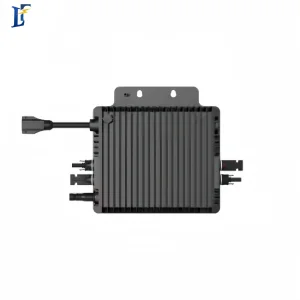
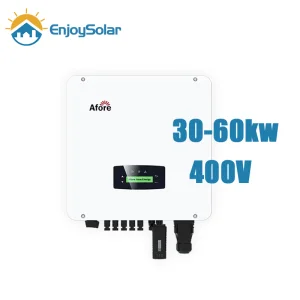
String inverters connect groups of panels in series, creating high-voltage DC runs to a central inverter station. This structure is highly efficient for large open areas but can suffer disproportionate output loss if dust partially shades a single panel. Microinverters operate on a panel-by-panel basis, converting DC to AC directly under the array. This isolates panel shade losses and eliminates high-voltage DC risks on rooftops, though it exposes individual microinverters to direct solar thermal load. HanFong supplies both configurations, allowing EPCs to design around specific project locations.
While Namibia's Net Metering Rules permit power exports to the grid, certain municipalities require zero-export profiles or capped export volumes. A grid-tie inverter equipped with a limiter monitor detects reverse current flow back to the grid. If generation exceeds local loads and grid exports are not permitted, the inverter throttles output to match the building's current demand, preventing safety flags or billing penalties from the local utility meter.
Explore our full line of grid-tie, off-grid, and hybrid string/micro inverters engineered for direct deployment across Namibian projects.
 Sriram Electricals