Explore our catalog of certified heavy-duty variable frequency converters, solar storage inverters, and micro-grid energy management platforms manufactured to global compliance standards.
A comprehensive whitepaper outlining systemic challenges in modern power distribution, microgrid control mechanisms, and the crucial role of advanced frequency inverter topologies.
As the world transitions from centralized fossil-fuel power plants to decentralized renewable energy sources like solar photovoltaic (PV) arrays and wind turbines, the global power distribution grid faces unprecedented physical stress. Traditional electrical grids relied on massive spinning generators that naturally provided rotational inertia—a physical buffer that resisted rapid changes in system frequency.
In contrast, modern renewable systems rely on solid-state power electronic converters. Without proper control strategies, high penetration of these inverter-based resources (IBRs) causes rapid frequency fluctuations, voltage sags, dynamic instability, and potential cascading blackouts. Consequently, grid stability solutions have transitioned from optional secondary grid support to non-negotiable core infrastructure.
Information Gain Insight: The evolution of modern power systems requires inverters to transition from traditional "grid-following" control schemes to advanced "grid-forming" topologies. Grid-forming inverters behave as virtual synchronous machines, instantly generating local voltage waveforms and regulating system frequency without relying on a pre-existing utility grid signal.
To resolve these vulnerabilities, modern high-power inverters integrate complex system firmware that performs dynamic functions:
Sourcing power conversion systems and grid-stabilization machinery from leading Chinese industrial clusters yields decisive logistical, developmental, and financial advantages for global EPC (Engineering, Procurement, and Construction) firms and energy utility developers.
China is home to the world’s most comprehensive ecosystem for high-power electronics development. In regions such as Guangzhou, factories utilize fully integrated local supply chains—ranging from precision raw silicon fabrication to advanced IGBT semiconductor assembly, localized copper magnetic winding factories, and state-of-the-art climate test chambers. This dense vertical integration radically compresses research and development cycles, reducing the typical OEM custom configuration turnaround from twelve months down to weeks.
Furthermore, China-based manufacturers are able to achieve highly competitive economies of scale without sacrificing build quality. By pairing advanced automated robotic assembly lines with strict quality assurance methodologies, Chinese factories can deliver heavy industrial equipment—such as multi-megawatt grid-tied utility inverters and specialized variable frequency drives (VFD)—at a fraction of the cost of legacy Western suppliers while employing identical core chipsets, thermal designs, and certification structures.
Procuring heavy-duty grid-forming and off-grid power solutions involves several critical technical considerations for industrial procurement departments. It is not merely a matter of power output sizing; it requires an evaluation of the system’s interface with electrical grids under extreme operating conditions.
Thermal stress is the leading cause of power semiconductor failures. Enterprises must source units containing advanced liquid cooling manifolds or redundant forced-air fans paired with intelligent temperature-dependent control algorithms.
Industrial applications feeding sensitive facility loads require high-quality filtering systems that maintain pure sine wave outputs, limiting total harmonic distortion to less than 3% under peak operational loads.
For operations in regions with unstable utility grids, purchasing managers prioritize systems that support black-start capabilities, enabling the local microgrid to reboot itself independently using energy storage assets.
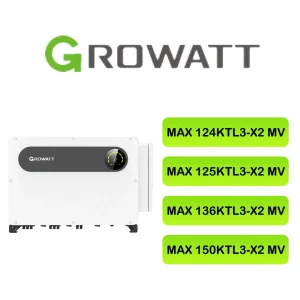
Whether integrating a utility-grade scale installation with 150kW grid-tied commercial inverters or securing localized water pumping systems via robust 1.5kW to 15kW MPPT variable frequency pump drives, understanding operational grid coupling metrics ensures maximum uptime and prevents structural damage to downstream machinery.
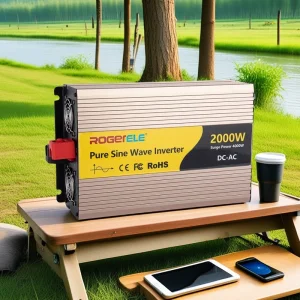
Guangzhou HanFong new energy technology Co., Ltd. is audit manufacturer of all kinds of inverter and soalr charge controller products. Our factory has been an electrical leader in products since 2013. Specialized in DC to AC power inverters , located in Guangzho City of China ,it is convinient to transport by air or by sea. With good reserch and development ,strictly quality control ,the product in the market has been widely recognized and praised.. With our inverters, it is used together in off grid solar system. We always focus on efficiency and quality of our products. With 5000 square meters of factory and 150 proficient employees, we are able to undertake many requiring OEM and ODM projects. We strictly comply to European standard, so far our products have earned CE and RoHS certifications. Our market and customers are all over the world. We strive to carry the most complete line of dc inverter. There is strong marketing and R&D team work hard to make inverter meet our customer needs.
We mainly manufacture those items to the market: North America ,Europen , Africa, South America, Middle East, Asia, and have full experience in OEM service. We have full confidence in achieving your quality level.

Deploying energy equipment globally requires navigation of strict localized technical regulations and grid codes. A major barrier for procurement groups is procuring hardware that fails to meet local utility interconnection certifications, causing significant project commissioning delays.
HanFong designs its dynamic energy storage and distribution units in accordance with strict international testing parameters. Our product line complies with standard European mandates (CE, RoHS), enabling seamless integration into European Union distribution grids. Additionally, our R&D engineers adjust firmware parameters to comply with regional specific standards such as IEEE 1547 (Interconnecting Distributed Resources with Electric Power Systems in North America), AS 4777 (Australia), and specific local grid codes throughout Asia and Latin America.
Moreover, local support represents a key component of modern operations. To sustain hardware installations over 15-to-20-year operational lifespans, we provide comprehensive technical services:
The next decade of grid stabilization will be driven by digital convergence. Simply responding to voltage fluctuations is no longer sufficient; power electronics must actively predict grid stress using edge computing and localized artificial intelligence. By integrating predictive machine learning models directly into inverter DSPs (Digital Signal Processors), future hardware will anticipate utility line disturbances, microgrid generation deficits, and load spikes before they manifest as physically destabilizing events.
Another emerging standard is hybrid multi-source synchronization. Industrial settings will continue to transition towards integrating solar PV, localized energy storage systems (BESS), diesel backup generators, and utility connections under a single, unified controller interface. The inverters will function as the brain of these decentralized systems, managing complex power flows dynamically to minimize energy purchase costs while guaranteeing a constant, stable energy supply.
Technical answers to critical integration, operations, and procurement questions frequently asked by utility engineers and project developers.
Grid-following (GFL) inverters require an external voltage source (like a utility grid or a running generator) to synchronize their output using a Phase-Locked Loop (PLL). They essentially inject current matching the grid's voltage waveform.
Grid-forming (GFM) inverters, however, act as voltage sources. They establish their own frequency and voltage waveforms, allowing them to support weak or isolated grids, provide black-start capabilities, and naturally resist voltage and frequency disturbances.
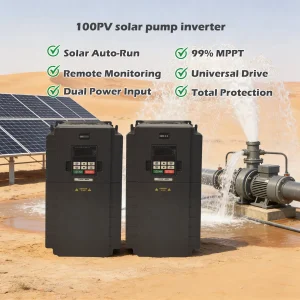
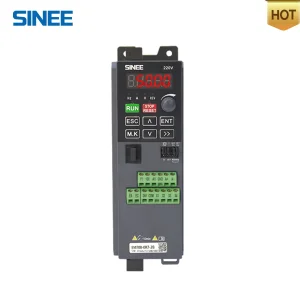
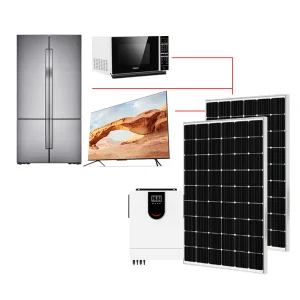
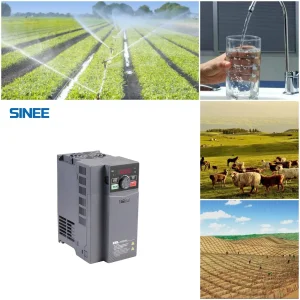
Solar pump inverters, such as the GD100-PV or Sinee Em730-PV, utilize Maximum Power Point Tracking (MPPT) algorithms to continuously maximize the output power from solar panels. By dynamically varying the motor pump's operational speed through integrated Variable Frequency Drive (VFD) technology, the controller avoids large inrush currents that could destabilize local rural grids.
This soft-start capability and real-time adjustment protect the electrical lines from rapid load changes while ensuring reliable water supply without requiring large, costly battery banks.
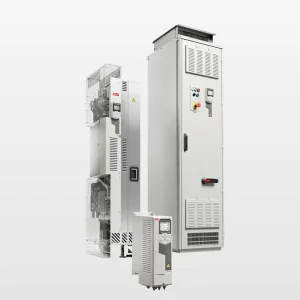
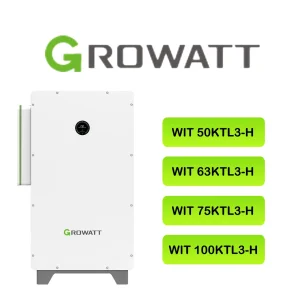
High-capacity systems (e.g., 5100kW low-voltage and medium-voltage drives) are critical for major industrial systems like water treatment plants, mine ventilation systems, and regional power substations. They allow precise speed and torque control of massive electric motors.
By preventing rapid load sags and voltage dips during heavy machinery start-up phases, these inverters serve as local stabilizing buffers, ensuring that industrial processes do not corrupt the stability of the surrounding utility transmission lines.
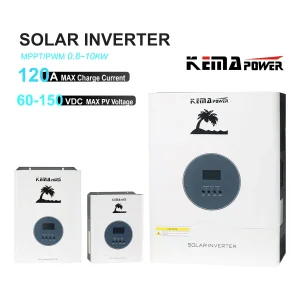
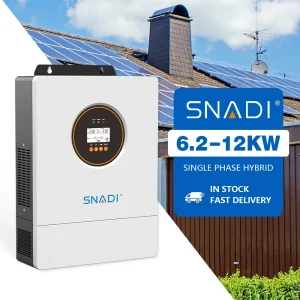
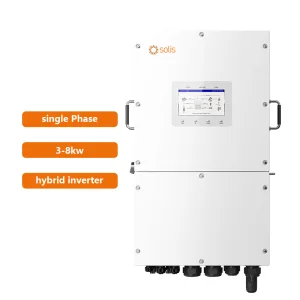
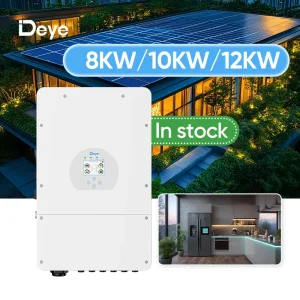
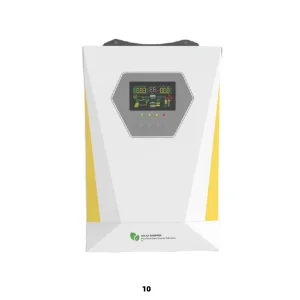
Hybrid solar inverters (such as the Deye or Solis hybrid series) combine solar power generation, battery energy storage, and grid interaction into a single smart system. During grid sags or peak pricing hours, these systems feed stored energy back into the local installation or the utility grid, performing peak shaving and dynamic line stabilization.
During utility grid failures, they transition into off-grid mode within milliseconds, supplying clean, continuous power to critical electrical loads.
Reputable factories like Guangzhou HanFong implement rigorous manufacturing verification procedures. This includes automated optical inspection (AOI) of PCBs, high-temperature burn-in tests to identify infant mortality in semiconductors, and load testing simulating utility grid sags and surge spikes.
These processes ensure that before the inverters ship, they satisfy international standards for safety, electromagnetic compatibility (EMC), and network integration performance, including CE and RoHS certifications.
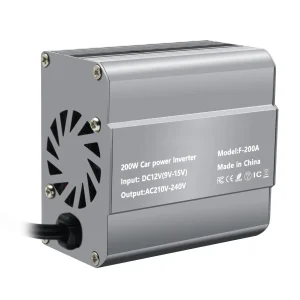
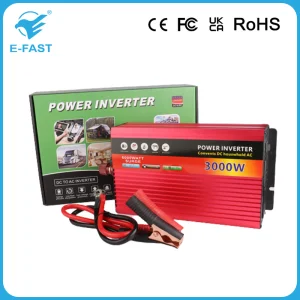
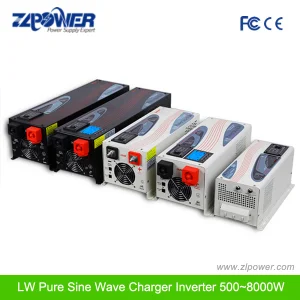
Complete your procurement requirement with our highly optimized high-frequency hybrid systems, modified wave inverters, and dedicated industrial micro-grid equipment.
 Sriram Electricals