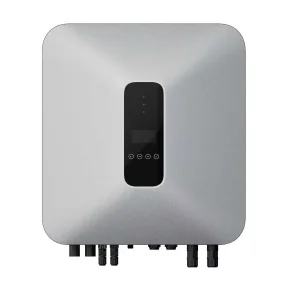
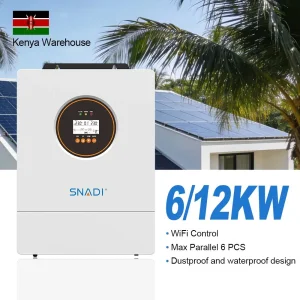
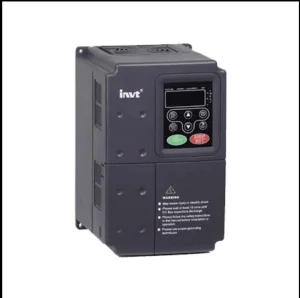
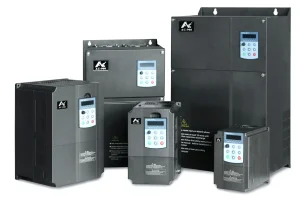
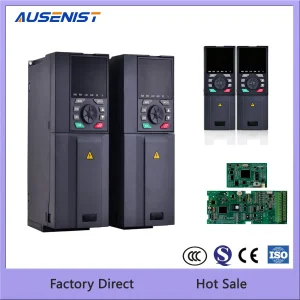
Explore our primary array of high-overload capacity VFDs, smart hybrid solar inverters, and utility-scale frequency converters engineered for maximum performance.
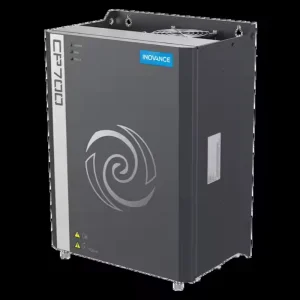
Globally, the transition to sustainable energy infrastructure is transitioning from a localized environmental target to a central pillars of enterprise risk management. Commercial and industrial (C&I) organizations are investing heavily in decentralized photovoltaic (PV) generation, dynamic energy storage systems (BESS), and precise automation topologies to mitigate high grid costs and operational volatility. This clean energy paradigm relies heavily on high-frequency power conversion systems—specifically hybrid inverters and variable frequency drives (VFDs)—which serve as the critical control link between raw renewable generation and delicate electrical loads.
For systems designers and international procurement managers, securing reliable hardware suppliers is not just about unit costs. It requires verifying compliance with evolving utility standards (such as IEEE 1547 and UL 1741), checking thermal tolerances under extreme operating conditions, and assessing the capability to custom-configure hardware configurations. As nations implement stringent carbon accounting schemes and Scope 2 emission limits, the efficiency curves of deployed inverters translate directly to thousands of dollars in annual energy savings or lost generation opportunities.
Modern hybrid on/off grid systems support ancillary frequency regulation, peak-shaving routines, and reactive power injection to maintain microgrid resilience.
By leveraging multi-channel Maximum Power Point Tracking (MPPT) designs, modern arrays recover up to 98.8% of theoretical solar irradiance.
Heavy-duty construction using IP54 enclosures and high-overload capacity components minimizes thermal failures in hostile climates.
Guangzhou HanFong New Energy Technology Co., Ltd. is an audited, premier manufacturer of highly diversified power inverters and solar charge controller products. Serving as a pioneer in the electrical conversion field since 2013, our specialized manufacturing complex is based in Guangzhou, China, enabling streamlined global logistics via deep-water shipping and international air freight networks.
Over the past decade, we have established an engineering-driven ecosystem based on rigorous quality control (QC) checkpoints, aggressive R&D investments, and a strong customer-centric ethos. Our advanced pure sine wave and hybrid inverter solutions are engineered specifically for off-grid configurations, ensuring stable, noise-free clean electricity for sensitive commercial and residential loads alike.
Operating a modern 5,000 square meter factory equipped with automated SMT assembly lines, thermal chamber stress-testing facilities, and automated optical inspection systems, our team of 150 proficient professionals excels at scaling OEM and ODM projects. Our operations comply with strict European quality and environmental paradigms, earning full CE and RoHS certifications to facilitate friction-free imports for partners across North America, Europe, Africa, South America, the Middle East, and Asia.

The manufacturing dominance of Chinese power electronics producers is rooted in deep vertical integration, supply chain concentration, and rapid technological deployment. Guangdong province, where HanFong is strategically positioned, serves as the global epicenter for raw copper refinement, silicon wafer processing, power semiconductor packaging (such as IGBT and SiC modules), and high-frequency transformer fabrication. This local ecosystem allows HanFong to source premium grade raw materials and test prototypes in cycles that are up to four times faster than Western counterparts.
Beyond raw proximity, our factory capitalizes on automation density. Automated winding machines, dynamic wave-soldering lines, and automated component-level testing benches minimize manual assembly variability. This ensures that every high-efficiency hybrid solar inverter or high-overload capacity variable frequency drive maintains a tight tolerances envelope. By pairing manufacturing agility with comprehensive component stress testing, we deliver superior cost-to-performance metrics, allowing our partners to remain competitive in global bids.
Custom enclosure designs, input/output voltage adjustments, and firmware-level tuning executed inside 4 weeks.
Thermal cycling, high-voltage insulation tests, and full-load burn-in testing performed on 100% of production runs.
Guangzhou's transport hub guarantees robust export routing, providing seamless freight forwarding to global ports.
Clean energy hardware must operate reliably across diverse electrical environments. By matching specific industrial topologies with custom-tailored inverter designs, HanFong solutions maintain high uptime and operational safety across multiple scenarios:
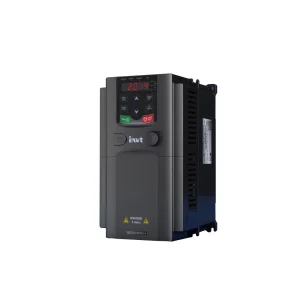
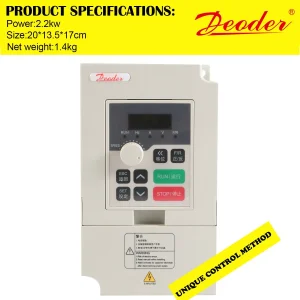
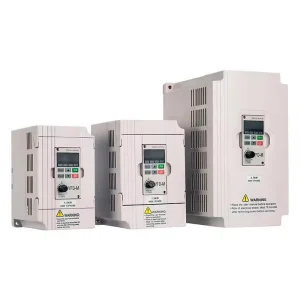
Variable frequency drives such as the MD500t and GD20 series are critical in manufacturing plants, mining operations, and clean water treatment facilities. Standard motors demand high starting torque, often resulting in severe grid current spikes. Implementing our high-overload capacity AC motor drives enables controlled acceleration curves, protecting mechanical gears, reducing grid peak-load charges, and yielding energy savings of up to 40% in pump and fan systems.
Commercial hotels and industrial laundromat chains deploy frequency converters like the INVT 0.75kw-18.5kw series to handle high inertia starts and dynamic speed transitions. By precision-controlling motor speed, these inverters regulate drum movements during wash and spin cycles, reducing water usage, limiting electrical noise, and preventing excessive motor heating.
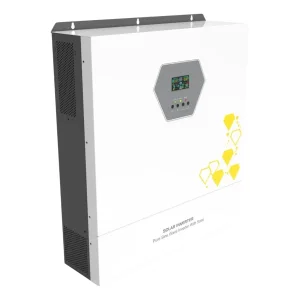
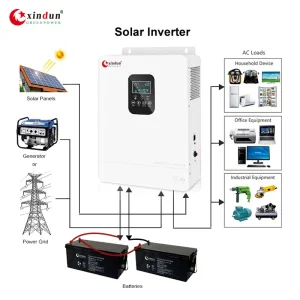
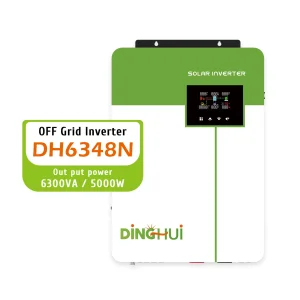
In rural areas, remote communities, and modern farming outposts, grid access is either unreliable or non-existent. Deploying off-grid hybrid solar inverters (e.g., 3kw and 5kw pure sine wave models with MPPT charge controllers) creates stable local microgrids. These systems gather solar power during the day, direct it to battery banks, and supply noise-free AC power to domestic appliances and agricultural water pumps.
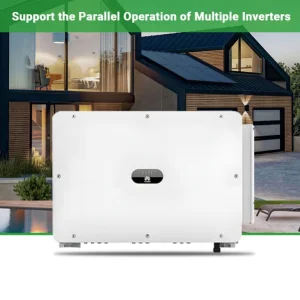
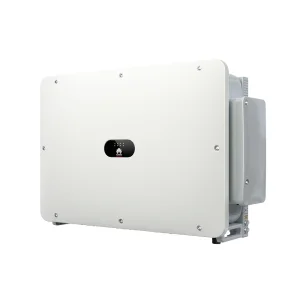
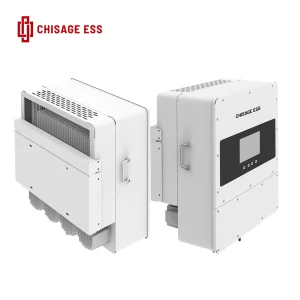
Large commercial facilities and municipal utility plants rely on high-capacity three-phase grid-tied systems. Using multi-MPPT industrial inverters, such as the Huawei SUN2000-150KTL, ensures optimal power harvesting even across partially shaded rooftops. These systems feed solar electricity directly into the facility's power network at 98.8% efficiency, dramatically reducing reliance on fossil-fuel utilities.
When selecting inverters or motor drive controllers, commercial procurement officers look beyond simple specifications. To minimize life-cycle costs and avoid system integration delays, engineering managers evaluate components against several strict parameters:
As technology advances, several trends are shaping the future of power electronics: the transition from traditional silicon to Silicon Carbide (SiC) and Gallium Nitride (GaN) transistors, the deployment of AI-based MPPT algorithms to track sunlight in rapidly changing weather, and the creation of bidirectional storage networks that allow electric vehicles to feed power back into the grid.
Review our direct engineering answers to the most common configuration and sourcing questions from around the industry.
Explore our second collection of high-overload capacity VFDs, three-phase grid-tied solutions, and specialized off-grid clean energy machinery.
 Sriram Electricals