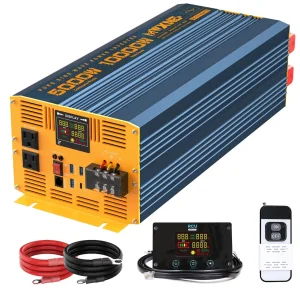
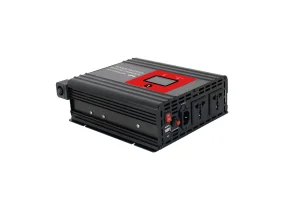
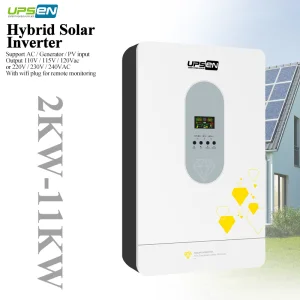
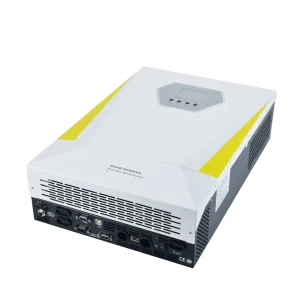
Guangzhou HanFong delivers state-of-the-art power conversion products designed for standard microgrids, household off-grid solar-wind complexes, and precision commercial equipment.
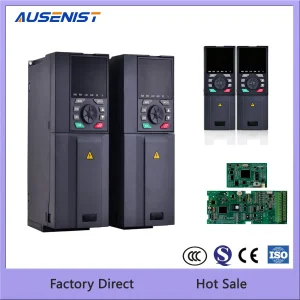
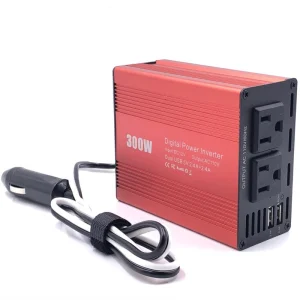
As the global trajectory shifts towards decentralized energy architectures, standardizing hybrid solar and wind systems has become imperative for operational resilience. Under critical compliance mandates, such as the European LVD and EMC directives, engineers require highly efficient power conversion layers capable of mitigating phase imbalances and high total harmonic distortion (THD). Guangzhou HanFong New Energy Technology Co., Ltd. serves as an audited pioneer in power electronics, driving grid stability with our comprehensive spectrum of DC-AC pure sine wave and hybrid high-frequency inverters.
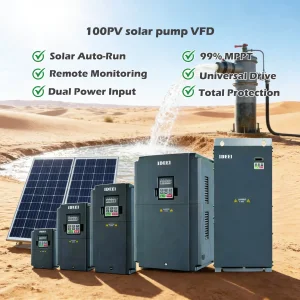
Established in 2013, our production methodology integrates intensive Research and Development (R&D) with stringent Quality Assurance (QA) gates. This ensures that every inverter delivers peak efficiency under extreme mechanical and environmental conditions. Our focus centers on developing resilient components that form the backbone of off-grid configurations, powering everything from residential complexes to large-scale industrial agricultural pump operations in complex terrains.

Optimizing efficiency levels requires a complete understanding of variable thermal profiles, load factors, and continuous wave generation. Below, we dissect the core methodologies engineered into Guangzhou HanFong's systems to guarantee uninterrupted operational stability.
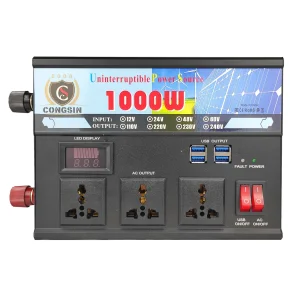
Mitigating total harmonic distortion (THD < 3%) to protect sensitive industrial electronics from voltage dips and noise interference, ensuring clean, continuous AC output profiles.
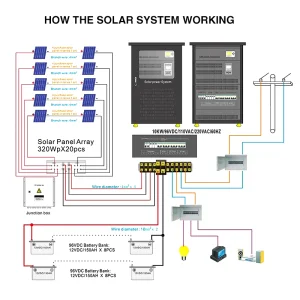
Ultra-fast maximum power point tracking loops that scan dynamic input curves in milliseconds, maximizing energy harvest under volatile wind and cloud-cover conditions.
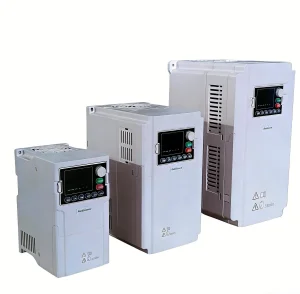
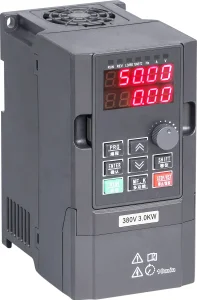
Enabling seamless variable frequency operation (220V/380V systems) to regulate motor startup currents, minimizing mechanical wear and reducing starting load requirements.
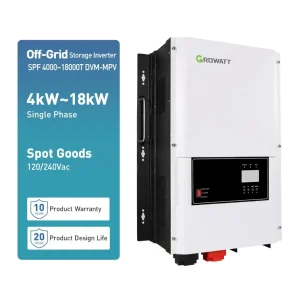
Industrial procurement planners must match specific application domains to either low-frequency copper transformer topologies or high-frequency semiconductor architectures. Low-frequency inverters (such as the 18kW SPF series) feature massive iron-core transformers, enabling them to absorb severe inductive motor spikes without experiencing thermal runaway. Conversely, high-frequency systems use advanced MOSFET or IGBT switching arrays to minimize device footprint, reduce structural weight, and maximize efficiency (exceeding 94%) under purely resistive loads.
Guangzhou HanFong's manufacturing capability is built upon precise operational engineering, automated quality gates, and skilled workforce management. Located in the logistical hub of Guangzhou, our 5,000 square meter facility houses dedicated SMT production lines, automated thermal wave chambers, and comprehensive system testing arrays. Our 150 skilled assembly specialists operate under a strict quality management system designed to minimize assembly deviations.
Our standard production workflow incorporates automated optical inspection (AOI) alongside rigorous 100% full-load burn-in aging procedures. This configuration challenges critical components, such as high-capacity capacitors, control ICs, and internal heat sink modules, under continuous thermal and voltage stresses for a minimum of 4 hours. This practice ensures that each power converter meets our strict low-defect performance standards prior to shipping.
Guangzhou HanFong's logistical footprint spans key international zones, including North America, Europe, Africa, South America, the Middle East, and Asia. Due to our proximity to deepwater maritime shipping corridors and major air cargo hubs in Guangzhou, we maintain low lead times for critical regional power systems. This efficient logistics setup supports enterprise purchasers, including utility operators, grid contractors, and regional distributors, in securing stable supply chains.
Our comprehensive engineering support matches the technical standards of diverse regional energy systems. Whether addressing the split-phase 110V/120V demands of the North American commercial sector, the 230V single-phase grid requirements of Europe, or the localized off-grid challenges of remote African microgrid installations, our systems are pre-configured to adapt to complex electrical environments.
At Guangzhou HanFong, our design philosophy is built upon engineering safety and structural reliability. In the high-voltage inverter industry, authority is earned through verified certifications rather than claims. Our products carry verified CE and RoHS certifications, proving compliance with the strict structural and material constraints demanded by European safety authorities.
Under our regulatory framework, every inverter family undergoes electromagnetic compatibility (EMC) testing. This ensures that the high-frequency switching frequency of our power electronics does not interfere with nearby communication equipment. Additionally, our Low Voltage Directive (LVD) design guarantees robust physical isolation between input DC stages and high-voltage AC output circuitry. This electrical separation protects downstream users and grid installations from potential faults.
Comprehensive answers regarding system selection, commissioning parameters, and operational optimization for procurement engineers.
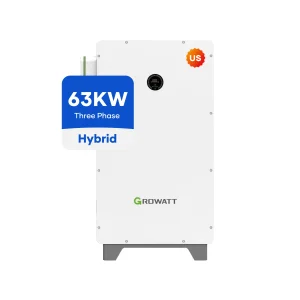
High-capacity hybrid systems and specialty frequency converters optimized for heavy duty pumps, commercial infrastructure, and remote power storage applications.
 Sriram Electricals