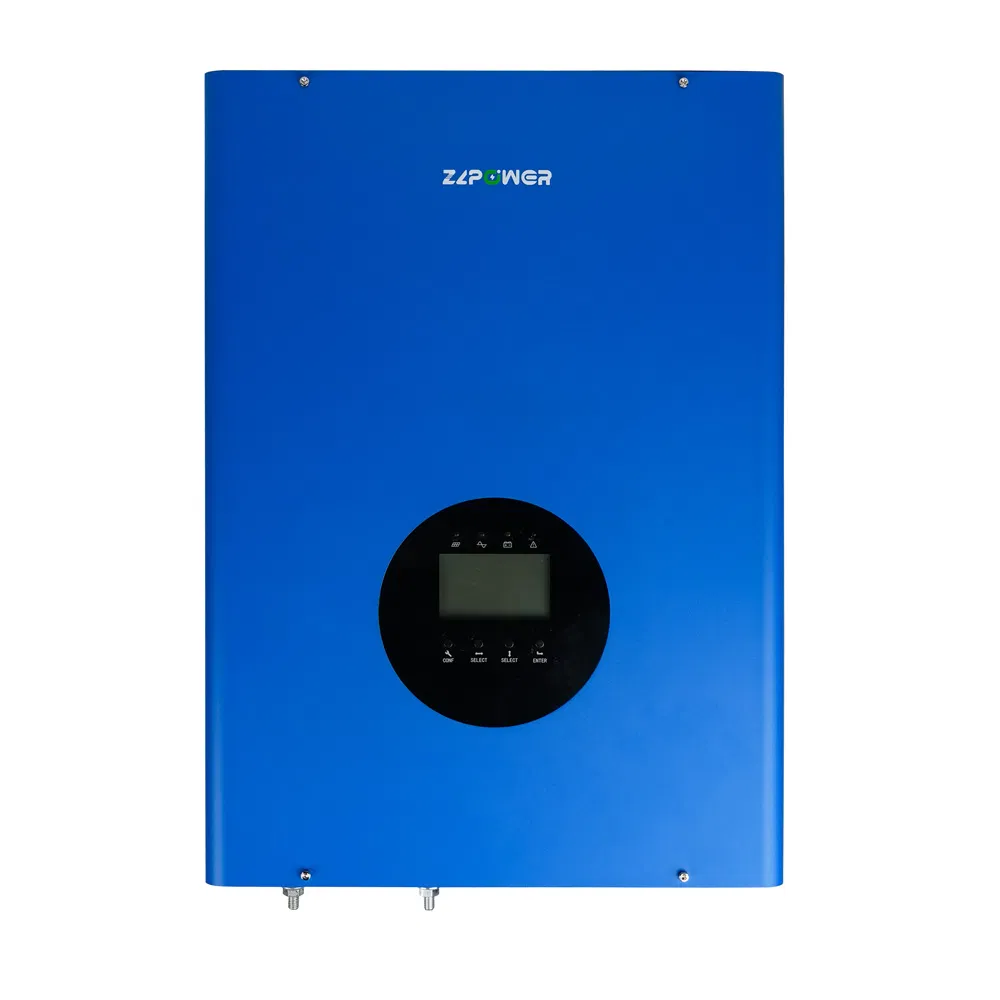
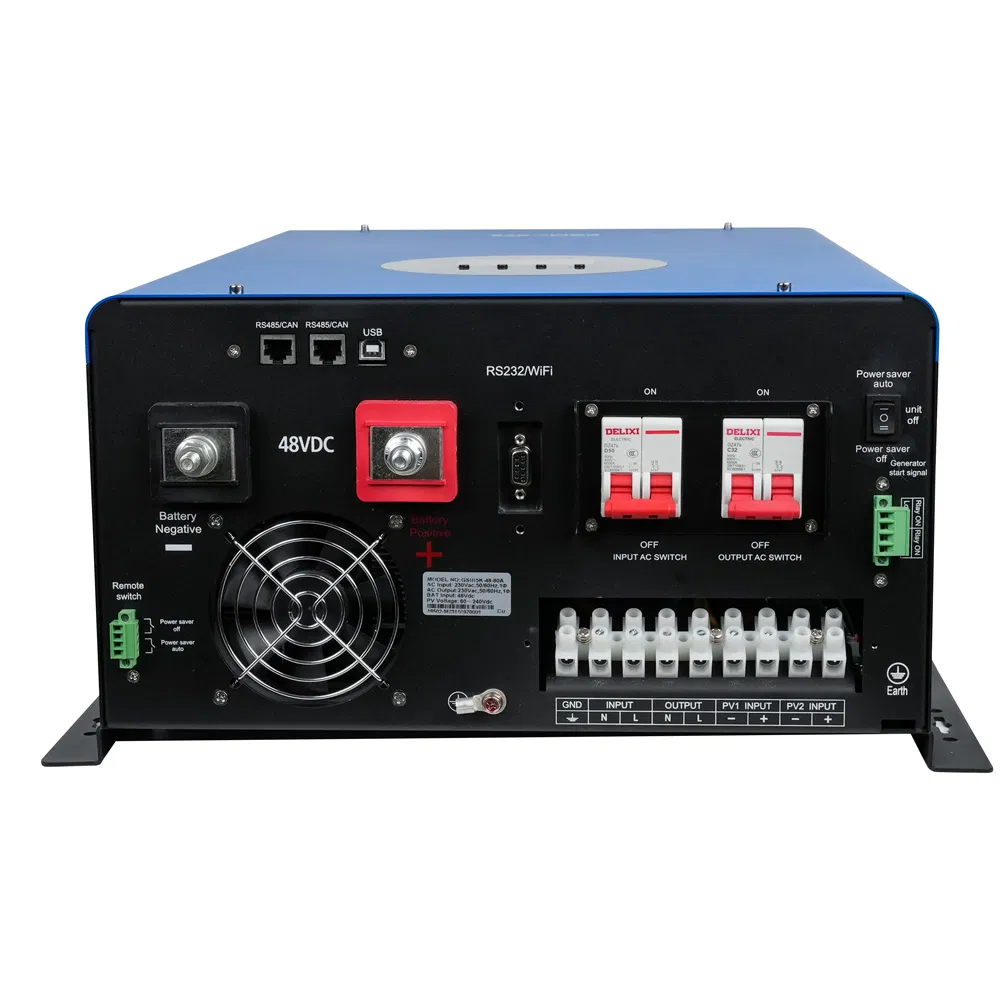
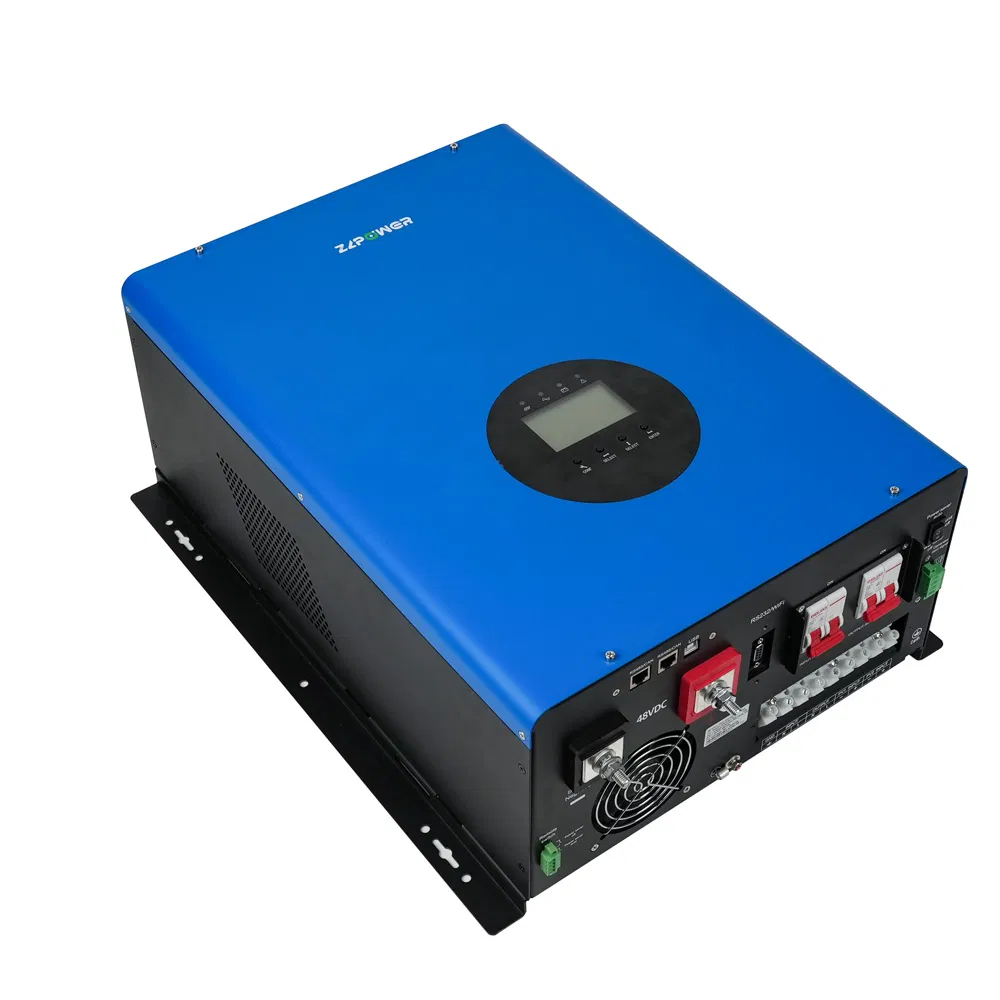
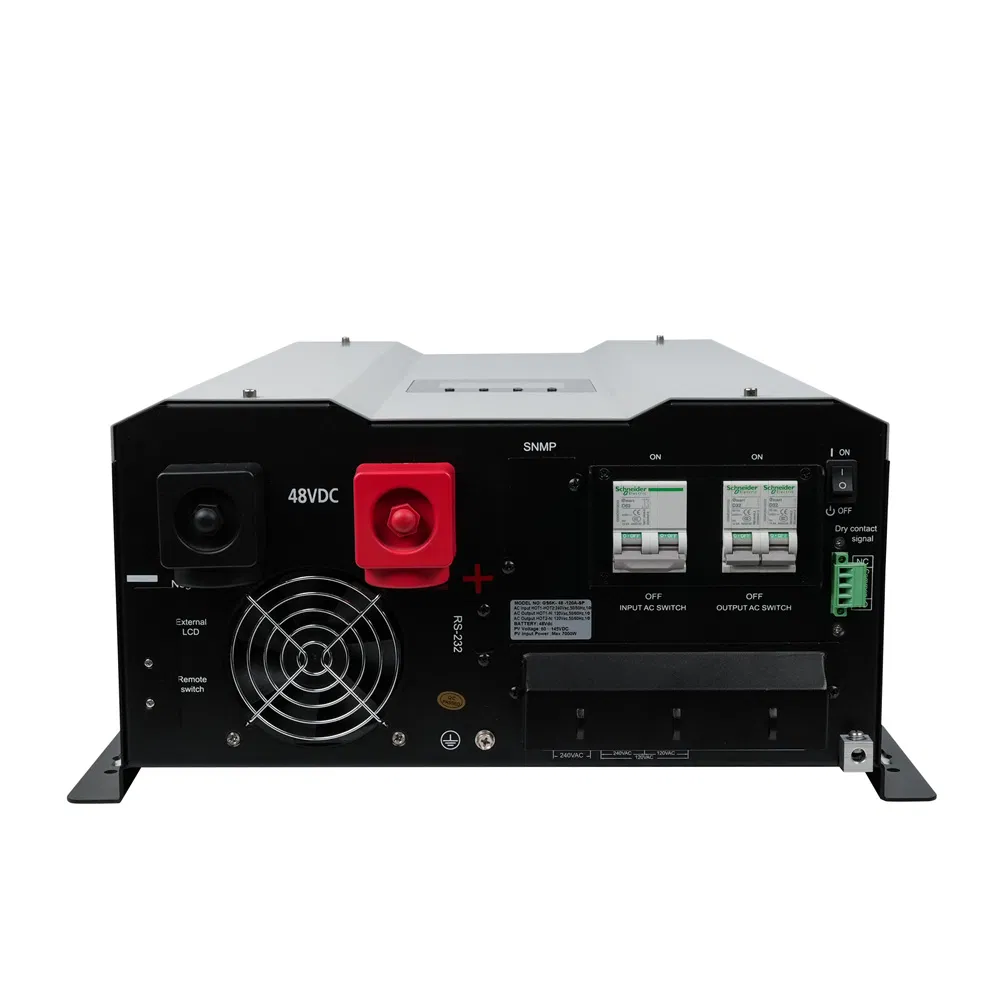
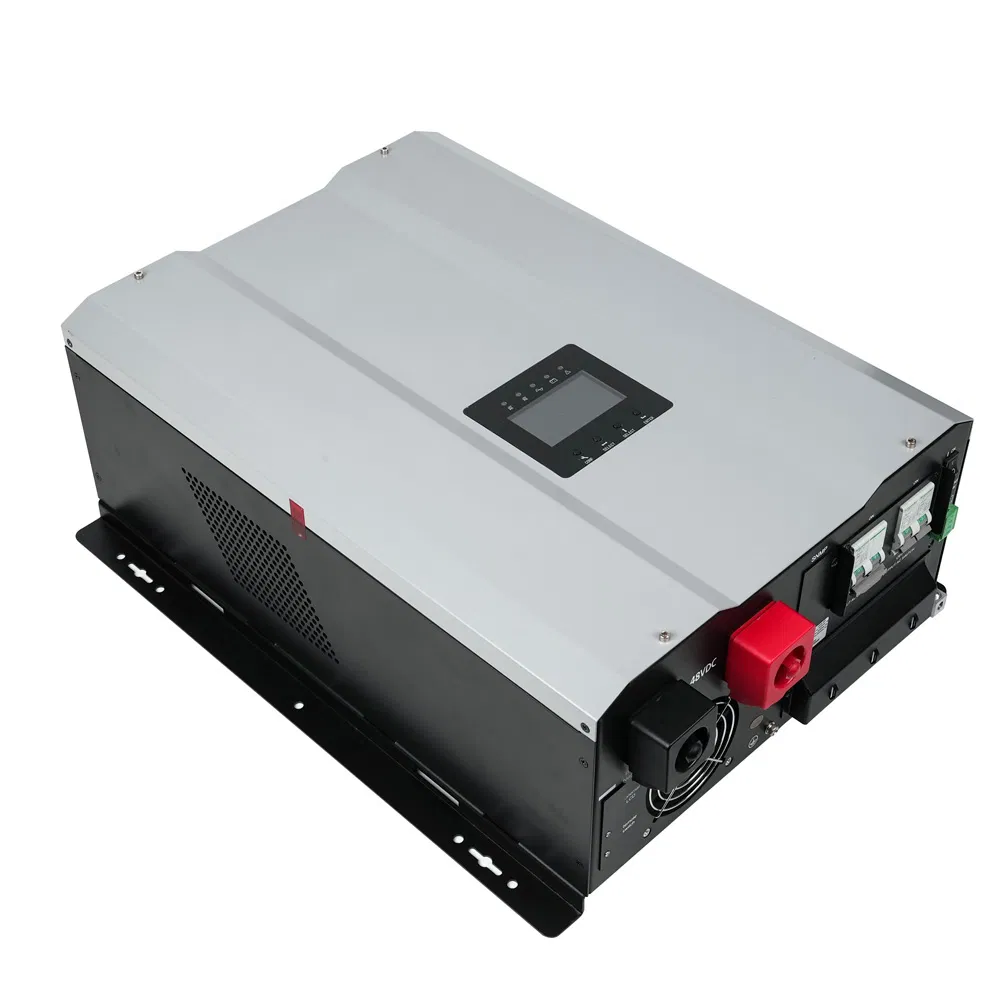
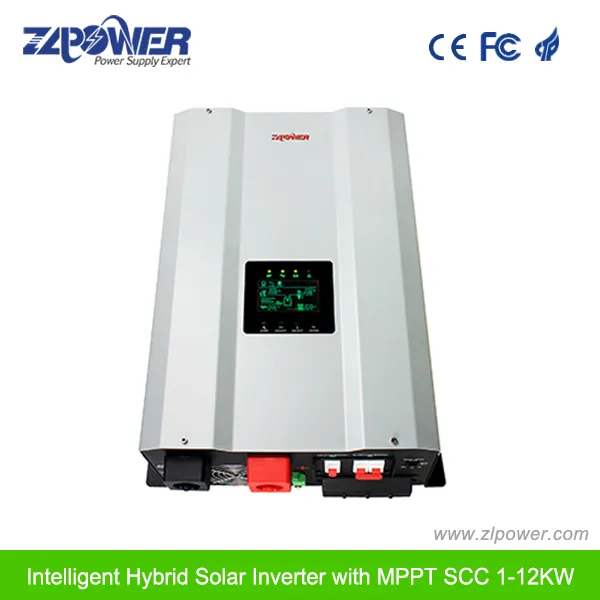
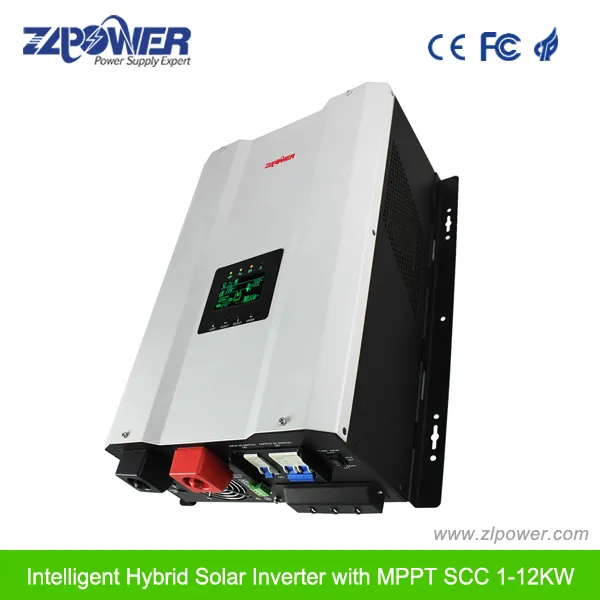
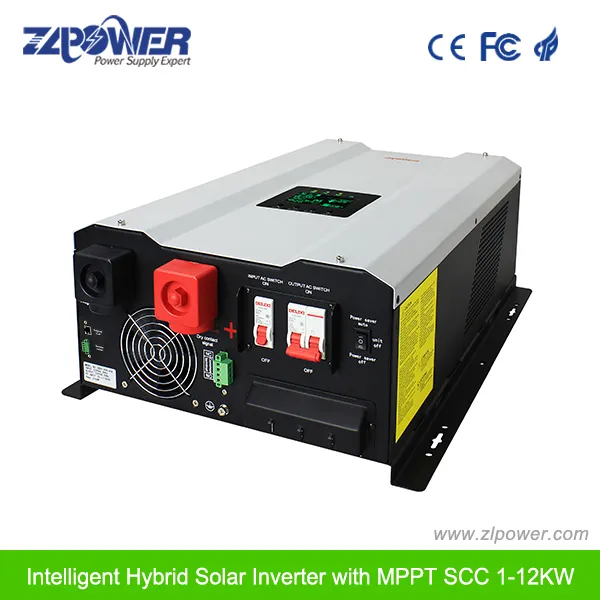
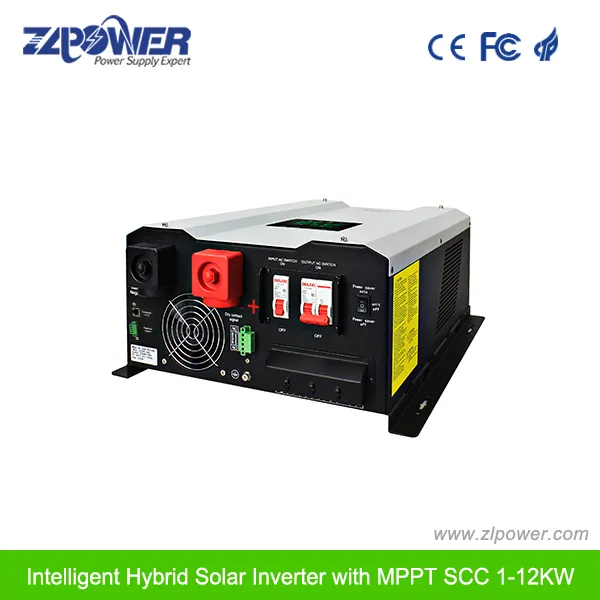
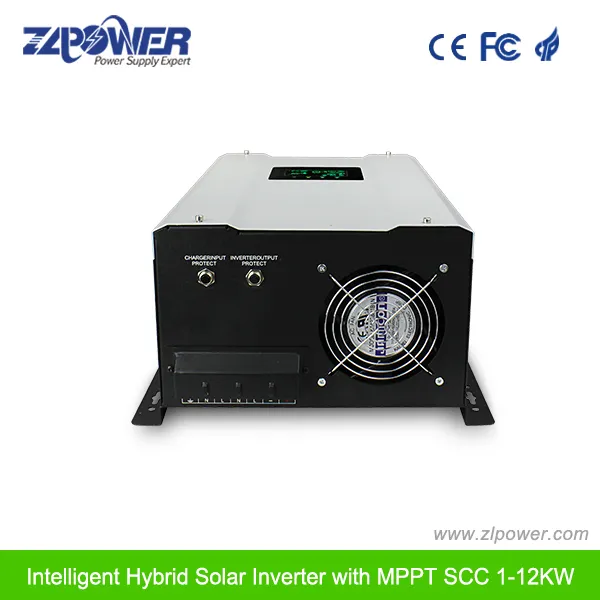
Low Frequency Inverter Pure Sine Wave with MPPT Charger

Customization: Available
Nature of Source Flow: Active Inverter
Certification: ISO9001, RoHS, CE, SAA

Product Description

Basic Information

Model NO.
GSIII
Output Power
4000-6000W
Grid Type
off-Grid Inverter
Output Type
Single
Circuit Topologies
Full-Bridge Type
Nature of Wave String
Sine Wave Inverter
Type
DC/AC Inverters
Nominal Input Voltage
120/230VAC
Frequency
50Hz or 60Hz
Output Voltage Waveform
Sine Wave
Power Factor
0.9~1.0
Transfer Time
20ms(Max)
Efficiency (Line Mode)
>98%
Nominal DC Input
24VDC, 48VDC
HS Code
8504403090
Production Capacity
10000PCS/Month

DC to AC Hybrid Solar Power Inverter

4000W / 6000W Low Frequency Engineering

🚀 High Surge Power

3 times peak power with exceptionally strong loading capacity for inductive loads.

☀️ MPPT Controller

Built-in 60A optional MPPT solar charger controller to maximize PV yield.

📱 Intelligent UI

LED/LCD display with enhanced functions setting and man-machine intelligent design.

🛡️ Full Protection

Overload, output short-circuit, over charging, and over temperature protection.

  • ✔️ AC/Solar charging Off grid Hybrid Inverter.
  • ✔️ 5 stages adjustable AC charging current.
  • ✔️ AC/DC priority modes can be set via LCD.
  • ✔️ Generator restart signal (Dry contact) support.

Technical Specifications

Parameters Model GS4000W GS5000W GS6000W
AC Input Nominal Power 4000W 5000W 6000W
Input Voltage 120/230VAC
Max AC Input 120V (Max 150V), 230V (Max 270V)
Frequency 50Hz: 41-54Hz, 60Hz: 51-64Hz
AC Output Waveform Pure Sine Wave
Power Factor 0.9 ~ 1.0
Transfer Time 20ms (Max)
Solar Charger Rated Current 60A MPPT
PV Input Range 30V-55VDC (24V System), 60V-110VDC (48V System)
Efficiency ≥97%
Battery Voltage 24VDC / 48VDC
Overcharge Prot. 31.0VDC (for 24V) / 62.0VDC (for 48V)
General Net Weight (kg) 30.8 36.0 37.0

Product Gallery

The Engineering Mastery of Modern Low-Frequency Inverters

In the critical realms of off-grid living and renewable energy, low-frequency inverters stand out due to their heavy-duty, copper-wound power transformers. Unlike high-frequency alternatives, this architecture handles instantaneous surge currents—often 3 to 5 times the rated power—making it perfect for motors, pumps, and compressors.
Key Technical Advantages:

  • Exceptional Robustness: Reduces stress on semiconductors, ensuring stability under continuous high loads.
  • Utility-Grade Output: Generates a pure sinusoidal waveform identical to grid power, protecting sensitive electronics.
  • Scalable Architecture: Supports modular growth for everything from cabins to industrial sites.
  • Intelligent Monitoring: Compatible with WiFi remote monitoring and multi-interface connectivity (RS485/CAN).

Frequently Asked Questions

Q1: What are the main benefits of a Low-Frequency Inverter?
Low-frequency inverters use heavy-duty transformers that provide superior surge capacity (up to 3 times the rated power) and better heat dissipation, making them more reliable for heavy inductive loads like air conditioners and pumps.
Q2: Does this hybrid inverter support both solar and AC charging?
Yes, it features AC/Solar hybrid charging. It includes a built-in MPPT solar controller and a 5-stage adjustable AC charger, allowing you to prioritize energy sources based on your needs.
Q3: Is it compatible with Lithium batteries?
Absolutely. The system is designed to be agnostic to energy storage evolution, supporting Lead-acid, Lithium (LiFePO4) batteries, and even a "Batteryless" mode where it powers loads directly from solar.
Q4: Can I monitor the system performance remotely?
Yes, the inverter supports WiFi remote monitoring and is equipped with multiple communication interfaces including RS485, CAN, and USB for seamless integration with smart home or industrial systems.
Q5: What protections are built into the device?
The inverter includes a comprehensive suite of safety features: Low battery alarm/shutdown, over-charging protection, overload protection, over-temperature protection, and output short-circuit protection.
Q6: What is the transfer time between grid and battery power?
The system features a fast transfer time of maximum 20ms, ensuring that most sensitive electronic equipment remains operational without rebooting during power transitions.

Related Products