Why Choose Pure Sine Wave Over Modified Sine Wave Inverters?

Time:2026-04-29 Author:Mason
0%

When considering power inverters, the choice often comes down to pure sine wave versus modified sine wave inverters. Industry data suggests that pure sine wave inverters account for a growing share of the market due to their superior performance. According to the latest report from Energy Solutions, over 70% of consumers prefer pure sine wave technology for its efficiency and reliability.

What is the difference between pure sine wave and modified sine wave inverter? This question is crucial for both consumers and professionals. Expert Robert Johnson emphasizes, “Pure sine wave inverters deliver consistent power, making them ideal for sensitive electronics.” His insight resonates with many who seek optimal functioning from their devices, such as medical equipment or high-end audio systems.

However, some users may opt for modified sine wave inverters due to their lower cost. While they can effectively power many devices, the performance may not meet expectations for more sensitive applications. The reality is that choosing the right inverter isn't always straightforward and merits deeper reflection.
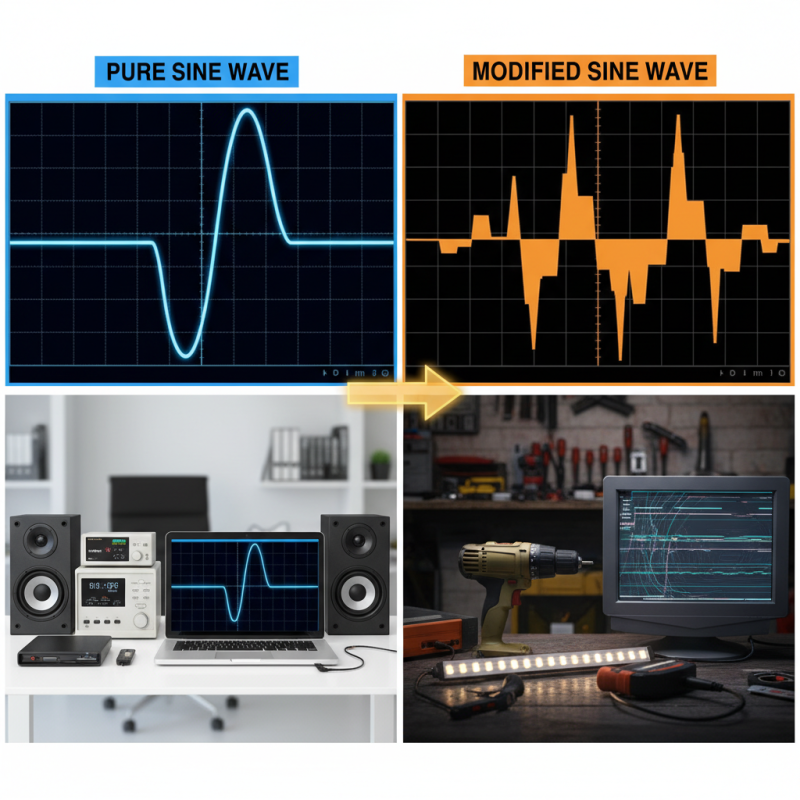
Why Choose Pure Sine Wave Over Modified Sine Wave Inverters?

Understanding Pure Sine Wave Inverters: Definition and Functionality

Pure sine wave inverters deliver clean and efficient power. Their output resembles the electricity from the grid, as it maintains a smooth voltage waveform. According to a report from the National Renewable Energy Laboratory (NREL), pure sine wave inverters exhibit a 98% efficiency rate, significantly reducing energy waste compared to modified sine wave alternatives, which can result in 10-20% more power loss. This efficiency translates to longer battery life for devices, making them crucial for solar power systems and backup power solutions.

Understanding the functionality of pure sine wave inverters is vital. They can support a wider range of devices, especially those with sensitive electronics. For instance, motors, medical equipment, and audio systems require stable power to function optimally. Modified sine wave inverters, on the other hand, can cause overheating, reduced lifespan, or even failure in these devices. A study by the Electric Power Research Institute (EPRI) highlighted that sensitive equipment often operates better on pure sine wave outputs, reducing potential malfunctions by up to 30%.

Choosing the right inverter impacts overall system performance. While pure sine wave inverters may be more expensive, their reliability and efficiency can justify the investment. For instance, the long-term costs associated with repairing or replacing devices can outweigh initial savings on cheaper inverter systems. Emphasizing the importance of selecting an inverter that matches your energy needs ensures a more sustainable solution.

Comparison of Power Output Quality: Pure Sine Wave vs Modified Sine Wave Inverters

This chart illustrates the harmonic distortion percentages for pure sine wave and modified sine wave inverters. Pure sine wave inverters produce a lower total harmonic distortion (THD) at approximately 3%, making them suitable for sensitive electronic devices, compared to 25% THD from modified sine wave inverters.

Benefits of Pure Sine Wave Inverters Over Modified Sine Wave Inverters

Pure sine wave inverters provide a level of power quality that modified sine wave inverters cannot match. Devices powered by pure sine wave inverters operate more efficiently. They tend to run cooler and quieter, thanks to the smooth and consistent waveform. This stability is crucial for sensitive electronics like computers and medical devices. Modified sine waves can introduce distortions that may damage these devices over time.

Additionally, pure sine wave inverters are better at handling loads that require high starting power. For example, when operating appliances with motors, such as refrigerators or vacuum cleaners, these inverters ensure that power peaks do not cause issues. This reliability could save both time and costly repairs in the long run. While the initial investment in pure sine wave technology is higher, the longevity and performance can justify the cost.

However, it's essential to consider your specific power needs. Some users may find modified sine wave inverters adequate for simple devices. Understanding the requirements of your electronics is critical. There’s no one-size-fits-all solution. Each option comes with pros and cons, making careful evaluation necessary.

Impact of Waveform Quality on Appliance Performance and Lifespan

When considering inverters, the waveform quality significantly affects appliance performance and lifespan. Pure sine wave inverters produce a smooth, continuous waveform. This ideal output provides stable power, closely resembling the electricity from the grid. Appliances designed for this electricity, such as motors and sensitive electronics, operate more efficiently.

Modified sine wave inverters, on the other hand, deliver a choppier output. This can lead to increased heat in appliances, potentially shortening their lifespan. Devices like refrigerators may struggle to maintain optimal operation, resulting in energy wastage. It's essential to understand that while modified sine wave inverters may be cheaper, they risk damaging delicate equipment over time.

Users may underestimate the long-term repercussions of choosing modified sine wave inverters. Over time, appliances could exhibit decreased performance and require early replacement. A pure sine wave inverter, though initially more costly, could save users money in replacement and repair costs. Prioritizing quality waveform output can ensure efficiency and longevity in your appliances.

Economic Considerations: Cost vs. Efficiency of Pure Sine Wave Inverters

When it comes to inverters, there’s a significant difference between pure sine wave and modified sine wave models. Pure sine wave inverters tend to be more expensive upfront. However, the efficiency they provide can lead to cost savings over time. They are designed to accurately mimic the power provided by utility companies. This means they can power sensitive devices more effectively.

Modified sine wave inverters are cheaper and simpler. Yet, they often struggle with certain electronics. Devices like microwaves or medical equipment can malfunction. This could result in costly repairs or replacements. The long-term costs may outweigh the initial savings.

Choosing pure sine wave inverters is about finding balance. The initial cost may be higher, but reliability is essential. Some users might overlook these factors, focusing only on purchase price. This short-sightedness can lead to frustrations down the road. Consider the efficiency in tandem with personal or business needs. Often, it pays to invest in quality technology.

Applications in Renewable Energy: Why Pure Sine Wave is Preferred

When considering renewable energy applications, pure sine wave inverters stand out. They create a smooth waveform that closely mimics the electricity from the grid. This results in better performance for sensitive electronics, like computers and medical devices.

Modified sine wave inverters can cause issues. They create a stepped waveform that may lead to overheating in some appliances. In contrast, pure sine wave inverters ensure efficient energy use, reducing wear and tear. Homeowners and businesses looking for reliability often prefer these inverters.

Pure sine wave inverters might be more expensive upfront. However, the longevity and efficiency can justify the cost. Investing in quality technology benefits users in the long run. Choosing the right inverter influences the overall success of renewable energy projects. It's essential to consider the specific needs of your devices before making a decision.

Why Choose Pure Sine Wave Over Modified Sine Wave Inverters? - Applications in Renewable Energy: Why Pure Sine Wave is Preferred

Feature Pure Sine Wave Inverter Modified Sine Wave Inverter
Output Waveform Smooth sinusoidal waveform Stepped waveform
Efficiency Higher efficiency, less wasted energy Lower efficiency, more energy loss
Equipment Compatibility Compatible with all electronic devices Not compatible with sensitive electronics
Noise Level Quieter operation May produce humming noise
Safety Safer for sensitive devices Risk of damaging equipment

FAQS

: What are pure sine wave inverters?

: Pure sine wave inverters produce clean, efficient power. Their output mimics grid electricity with a smooth voltage waveform.

Why are pure sine wave inverters more efficient?

They have a 98% efficiency rate. This reduces energy waste significantly compared to modified sine wave inverters.

What types of devices benefit from pure sine wave inverters?

Sensitive devices like motors and medical equipment require stable power. Pure sine wave inverters meet these needs effectively.

Are pure sine wave inverters cost-effective in the long run?

Yes, they may be more expensive initially. However, they save costs over time by reducing device malfunctions and repairs.

What issues can modified sine wave inverters cause?

They can lead to overheating and reduced lifespan in sensitive electronics, causing potential failures and costly repairs.

How should one choose an inverter?

Consider both initial costs and efficiency. A short-sighted focus on price may result in future frustrations.

Can pure sine wave inverters extend battery life?

Yes, their efficiency leads to longer battery life for connected devices, enhancing overall performance.

Is there any downside to pure sine wave inverters?

They tend to have a higher upfront cost. Users might find it challenging to commit initially.

How do pure sine wave inverters affect system performance?

They improve overall reliability and reduce malfunctions, ensuring devices function optimally.

Should I prioritize cost or reliability when selecting an inverter?

Prioritizing reliability is crucial. While costs matter, investing in quality can prevent future challenges.

Conclusion

The article titled "Why Choose Pure Sine Wave Over Modified Sine Wave Inverters?" explores the significant advantages of pure sine wave inverters compared to modified sine wave inverters. It begins by defining what a pure sine wave inverter is and how it functions, emphasizing its ability to produce a smooth and consistent electrical waveform. The benefits of using pure sine wave inverters are highlighted, particularly regarding their positive impact on the performance and lifespan of appliances, as quality of waveform plays a crucial role in operational efficiency.

Furthermore, the article examines economic factors, weighing the cost versus efficiency of pure sine wave inverters, ultimately presenting them as a more favorable investment. The discussion extends to various applications in renewable energy, illustrating why pure sine wave inverters are preferred in this sector. By addressing the question, "What is the difference between pure sine wave and modified sine wave inverter?", the article concludes that pure sine wave options offer superior reliability and enhanced functionality for both residential and industrial use.

Mason

Mason

Mason is a seasoned marketing professional with a deep expertise in the company's offerings and a passion for driving brand awareness. With a strong background in digital marketing strategies, he has an innate ability to connect with diverse audiences and effectively communicate product benefits.......