Choosing the right inverter for your home is crucial. You might wonder, "What size inverter do I need for home use?" The answer depends on various factors. Understanding your power needs is a key step.
Inverters convert DC power to AC power, making it usable for home appliances. Knowing the wattage of your devices is essential. For instance, a refrigerator may require more power than a few light bulbs. Consider all devices you plan to use. Are you including tools or air conditioning systems? This adds up quickly.
Additionally, you should think about peak power requirements. Some appliances need a surge of power to start. This can influence the size of the inverter you choose. Careful assessment leads to reliable choices. It's not just about matching numbers; it's about ensuring functionality and safety. Evaluate your needs thoughtfully. Reflect on your energy consumption for a well-informed decision.
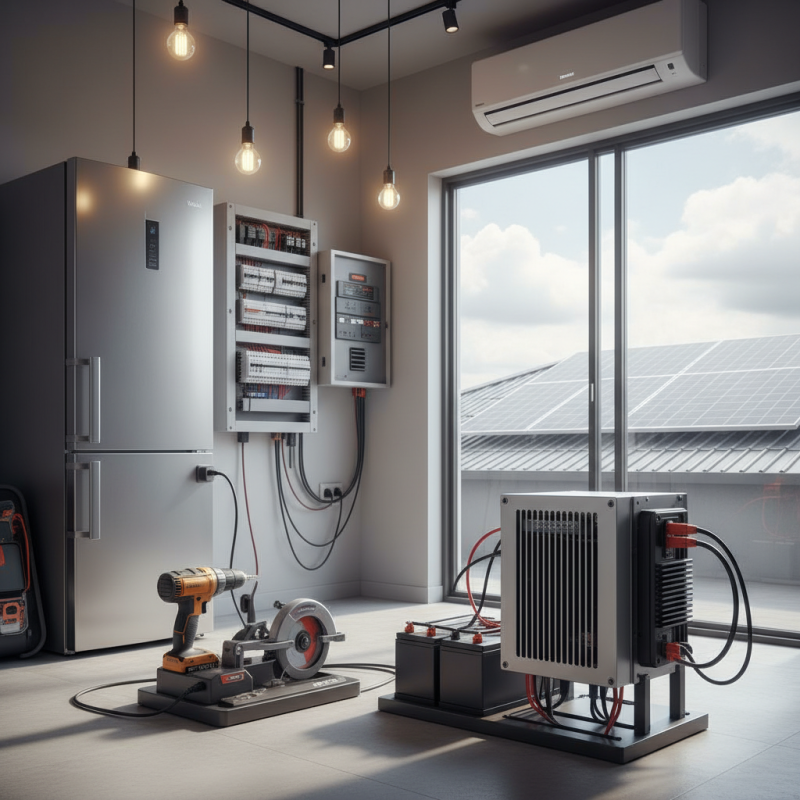
When determining the right inverter for home use, understanding its basics is essential. An inverter converts DC electricity from batteries or solar panels into AC electricity used in homes. It is crucial to know how much power your appliances consume. This knowledge helps you choose an inverter that can handle your needs without overloading.
Common household devices like refrigerators, microwaves, and lights have different power requirements. For instance, a refrigerator may require 600-800 watts, while a microwave might need 1000-1500 watts. If you plan to run multiple devices simultaneously, you must consider the cumulative wattage. Many homeowners underestimate the starting power required for appliances, especially those with motors. This often leads to confusion and the need to rethink their choices.
Not every situation is straightforward. Some may find that their inverters do not support all their appliances effectively. Ignoring surge power ratings can result in frustrating outages. Additionally, factors like battery capacity and inverter efficiency play a crucial role in overall performance. A deeper understanding can help you avoid common pitfalls.
When considering what size inverter you need for home use, calculating your power requirements is crucial. Begin by listing all your appliances. Find out the wattage of each device. Common items include refrigerators, TVs, lights, and computers. This list will help you understand your total power needs.
To simplify your calculations, consider using a power calculator. These tools can give you a quick estimate based on your appliance list. Remember, add extra capacity for surge power. Many devices require more power when starting up. A good rule of thumb is to multiply your total wattage by 1.5 for the surge factor.
Tips: Always overshoot your inverter size. Choosing an inverter that’s slightly larger than your needs provides flexibility. It prevents overloading and extends the inverter’s lifespan. Check your usage regularly. Sometimes, you may find devices you don’t use often. Eliminate the unnecessary to optimize power consumption. This reflection can help adjust your inverter needs in the future.
When considering an inverter for home use, understanding the different types available is crucial. The most common types are pure sine wave, modified sine wave, and grid-tie inverters.
Pure sine wave inverters produce a clean, consistent power output. They are ideal for sensitive electronics. However, they tend to be the most expensive option.
Modified sine wave inverters are a more affordable choice. They work well for most household appliances but may not support certain electronics efficiently. It's essential to consider the devices you plan to power.
Do your electronics require a smooth power supply? If so, a pure sine wave inverter might be worth the investment.
However, if you have simpler devices, a modified sine wave inverter could suffice.
Grid-tie inverters connect your home to the electricity grid. They help supply power during the day and can send excessive energy back to the grid.
This setup can lower electricity bills. Yet, they only work if there’s grid power. In contrast, off-grid inverters allow complete independence from the grid. They store energy generated from solar panels or batteries.
Assess your needs carefully. Each inverter type has its nuances. Making the right choice can impact efficiency and comfort in your home.
When choosing the right inverter for your home, several factors come into play. Understanding your power needs is crucial. Calculate the total wattage of the devices you want to run. Consider the peak wattage as well, especially for appliances with motors. For example, a refrigerator typically requires a higher surge of power when starting up.
The type of appliances in your home also affects inverter size. Are you using power-hungry devices like air conditioners or multiple computers? Each has different power demands. Additionally, the duration for which you use these appliances matters. Short bursts may not require a large inverter, but sustained use will.
Climate and battery capacity can influence your choice as well. A colder climate can make batteries less efficient. This means you may need a larger inverter to compensate. Reflecting on these factors leads to better decisions. However, many people overlook their actual needs and buy oversized inverters. This can lead to unnecessary costs and inefficiencies. Balancing your usage and inverter size is key.
When choosing an inverter for your home, start by assessing your energy needs. Different appliances require varying amounts of power. For example, a refrigerator may need 600-1200 watts. In contrast, a microwave may demand 800-1200 watts. Calculate the total wattage of all the devices you plan to use simultaneously. This calculation is crucial to ensure you select an inverter that can handle your power requirements.
Consider peak power requirements as well. Some devices, like air conditioners, may need a surge of power upon starting. This peak can be two to three times their running wattage. Selecting an inverter with a higher peak capacity helps prevent overloads. It’s also wise to look into battery capacity. A well-sized battery ensures you have energy when needed without draining too quickly.
Remember to evaluate the inverter's features. Some models offer advanced functions like display systems for monitoring usage. While these features are helpful, they can add complexity. Consider what you genuinely need. Not every feature is essential for everyone. Take time to reflect on your energy consumption habits and adjust your choices accordingly.
| Appliance | Wattage (Watts) | Inverter Size Recommendation (VA) |
|---|---|---|
| Refrigerator | 100 - 800 | 1200 - 1600 |
| Microwave Oven | 600 - 1200 | 1500 - 2000 |
| Television | 50 - 400 | 600 - 800 |
| Laptop | 50 - 100 | 200 - 300 |
| Washing Machine | 400 - 1200 | 1500 - 2000 |
| Air Conditioner | 1000 - 3000 | 3500 - 4000 |
: List all appliances and find their wattage. Common items include refrigerators, TVs, and lights.
Use a power calculator. It provides quick estimates based on your appliance list.
Devices often require more power at startup. Multiply your total wattage by 1.5 for surge factor.
Yes, overshoot your inverter size. It prevents overloading and can extend lifespan.
Regularly check your usage. Remove appliances you don’t use often to adjust inverter needs.
Pure sine wave, modified sine wave, and grid-tie inverters are the most common types.
Pure sine wave inverters produce clean power for sensitive electronics. Modified sine wave is more affordable, but less efficient for some devices.
No, grid-tie inverters require grid power. Off-grid inverters allow independence from the grid.
Power-hungry devices, like air conditioners, need larger inverters due to higher demands.
Consider power needs, usage duration, climate, and battery capacity for better decisions.
When considering "What size inverter do I need for home use," it is crucial to understand the basics of inverters and their role in home energy management. Inverters are devices that convert direct current (DC) into alternating current (AC), allowing household appliances to function with energy from sources like batteries or solar panels. To determine the appropriate inverter size, one must calculate their home's power requirements, taking into account the wattage of all devices that will be used simultaneously.
Additionally, there are various types of inverters suitable for residential settings, such as pure sine wave inverters, modified sine wave inverters, and off-grid or grid-tied options. Several factors influence the size of the inverter needed, including the total power consumption, peak load demand, and future energy needs. By thoroughly assessing these elements, homeowners can effectively choose the right inverter for their energy requirements, ensuring efficiency and reliability in their energy supply.

Sriram Electricals