Choosing a pure sine wave inverter begins with the appliances you trust every day. Refrigerators, washing machines, pumps, televisions, and medical equipment may respond poorly to rougher waveforms. Why is pure sine wave important for home appliances? It closely resembles utility electricity, supporting quieter motors, steadier heating, and more predictable electronic control.
The U.S. Energy Information Administration’s Residential Energy Consumption Survey shows that American homes use electricity across many changing loads, rather than one constant demand. A refrigerator may start while a pump or microwave is already running. That starting surge can exceed an appliance’s running wattage several times. A practical selection therefore checks continuous power, peak surge capacity, output voltage, frequency, and total harmonic distortion. It should also consider battery voltage, cable length, ventilation, and conversion efficiency.
Professional guidance matters. IEEE 519 provides widely used principles for managing harmonic distortion in electrical systems, while NREL research on power electronics highlights efficiency, thermal performance, and control quality as important inverter factors. Safety certification, such as UL 458 or the applicable regional standard, adds another layer of confidence. Certification alone is not enough. Installation quality still matters.
A 1,000-watt label can mislead.
For example, a 700-watt refrigerator may briefly demand much more during compressor startup. A cautious design adds headroom instead of operating continuously at the limit. In real homes, loads are messy. That is why choosing an inverter by appliance type, measured demand, and documented waveform quality is more reliable than relying on price alone. The best decision may require checking manuals, using a watt meter, and accepting that one universal size rarely fits every household.
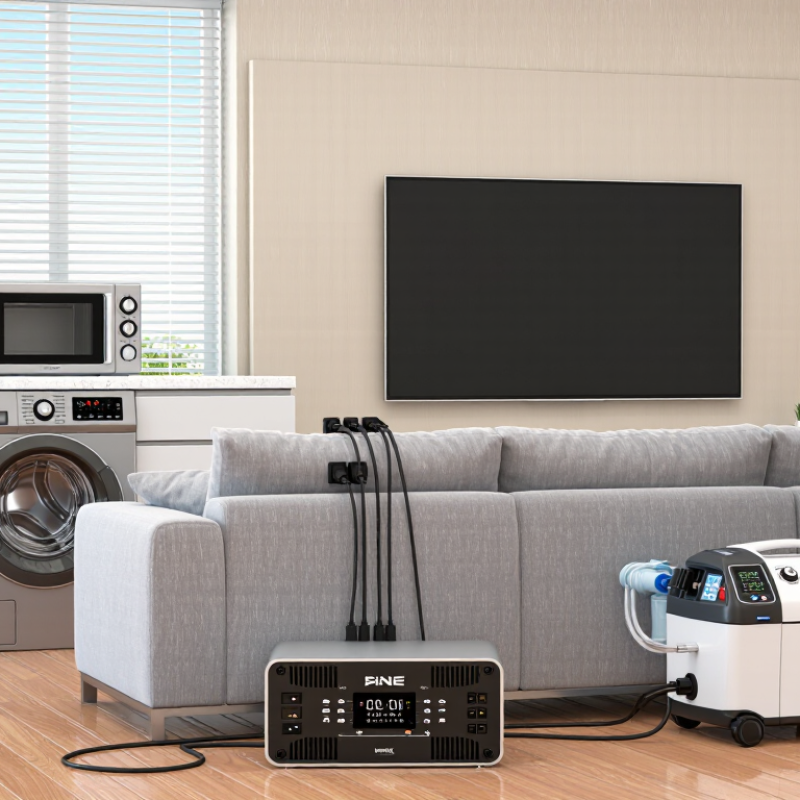
A pure sine wave inverter produces electricity that closely matches utility power. This matters for refrigerators, pumps, fans, audio equipment, and variable-speed appliances. Their motors often start with a brief surge. A rough waveform may cause buzzing, extra heat, unstable control, or failed starts.
The IEA’s Renewables 2024 report recorded nearly 510 GW of renewable capacity added worldwide in 2023. More homes now combine batteries, solar panels, and sensitive electronics. In this setting, waveform quality is not a luxury. It is part of equipment protection. The U.S. Energy Information Administration’s 2020 Residential Energy Consumption Survey found that space heating used 42% of household energy. Heating equipment can therefore place a serious demand on an inverter. Size for both continuous watts and starting watts. Do not rely only on the appliance’s running label.
Check the inverter’s measured total harmonic distortion, efficiency, idle consumption, cooling method, overload protection, and transfer time. Ask how performance changes under low battery voltage. IEEE 519-2022 provides useful harmonic-control principles, although it is not a universal inverter pass mark. A field technician would also inspect cable length, fuse sizing, ventilation, and grounding. Small details matter. A larger inverter is not automatically better. It may waste energy while lightly loaded. I still question impressive efficiency figures without test conditions, because laboratory results rarely match a dusty cabinet, cold morning, or refrigerator startup. Choose documented test data and installation instructions over vague claims.
| Selection Factor | What to Check | Typical or Recommended Value | Why It Matters for Home Appliances |
|---|---|---|---|
| Output waveform | Pure sine wave output | Low-distortion sine wave; ideally total harmonic distortion (THD) below 5% | Provides utility-like power for motors, compressors, transformers, audio equipment, and sensitive electronics. |
| Continuous power rating | The total wattage the inverter can supply continuously | Select at least 20–30% above the calculated running load | The extra capacity reduces overheating and prevents nuisance shutdowns when several appliances operate together. |
| Surge or peak power | Short-term startup capacity for inductive loads | Commonly 2–3 times the running wattage for motor-driven equipment | Refrigerators, pumps, freezers, and air-conditioners may draw several times their normal power during startup. |
| Load calculation | Running watts plus possible starting watts | Required continuous rating ≥ total running watts × 1.2–1.3 | Accurate sizing helps balance reliability, battery use, cost, and inverter efficiency. |
| Output voltage and frequency | Compatibility with the local electrical system | Common systems use 120 V or 230 V and 50 Hz or 60 Hz | The inverter must match appliance voltage and frequency requirements to operate safely and correctly. |
| Input battery voltage | Battery-bank voltage supported by the inverter | 12 V for smaller systems; 24 V or 48 V for higher power and longer cable runs | Higher-voltage battery banks require less current, which can reduce cable losses and cable size. |
| Conversion efficiency | Efficiency at the expected operating load | Many quality units operate around 85–95%, depending on load and design | Higher efficiency generally means less battery energy is lost as heat and longer runtime. |
| No-load consumption | Power consumed when appliances are turned off | Choose a low standby draw or an energy-saving mode for backup use | Low idle consumption helps preserve battery capacity during long outages. |
| Protection functions | Overload, short-circuit, over-temperature, low-voltage, and over-voltage protection | All core protections should be built into the inverter | Protection features help reduce the risk of damage to the inverter, battery, wiring, and connected appliances. |
| Appliance compatibility | Type of load and sensitivity to waveform quality | Suitable for refrigerators, fans, pumps, televisions, computers, medical devices, and audio equipment when correctly sized | Pure sine wave power can reduce buzzing, excess heat, malfunction, and motor stress compared with less-suitable waveforms. |
| Transfer-switch compatibility | Ability to transfer between utility power and inverter power | Use a properly rated transfer switch or built-in UPS function when required | A suitable transfer system can provide automatic backup and help prevent unsafe back-feeding into the utility grid. |
| Cooling and operating noise | Fan control, ventilation, and stated noise level | Install in a dry, ventilated area; select quieter operation for bedrooms and living spaces | Adequate cooling improves service life, while low noise improves household comfort. |
| Installation and safety | Cable sizing, fusing, grounding, ventilation, and local electrical requirements | Follow the installation manual and applicable electrical codes; use qualified assistance for fixed wiring | Correct installation is essential because high-current battery systems can create serious fire and shock hazards. |
Read each appliance’s running wattage from its rating label. Add appliances used at the same time. Leave room.
Motors can briefly need several times their running power. A refrigerator may use 150 watts normally, then demand 700 watts briefly. That surge can shut down an undersized inverter.
Choose continuous capacity at least 25% above the combined running load. This margin helps handle measurement errors and changing loads. My early estimate was too optimistic.
Check its instruction manual or ask a qualified electrician. Refrigerators, pumps, and freezers often have substantial startup demands. Measure with a watt meter when possible.
It provides smooth, stable power for refrigerators, fans, medical devices, and sensitive electronics. Still, confirm the appliance’s requirements. Suitable does not mean risk-free.
Choose overload, short-circuit, over-temperature, and low-voltage protection. A clear fault display can help during an outage. Do not ignore grounding instructions.
Compare efficiency at your actual working load, not only the advertised peak. Small loads may still waste battery energy. Use short, correctly sized battery cables. Heat matters.
Place it in a dry, ventilated area away from curtains and direct sunlight. Keep cooling vents clear. Never place it on a soft surface.
Install a properly rated fuse close to the battery. Check terminals for looseness and heat. A qualified electrician should handle fixed wiring and transfer equipment.
Test it monthly with the heaviest realistic appliance combination. Include the refrigerator, freezer, pump, or other motor loads. I sometimes forget this step, but testing reveals weak points.
Choosing a pure sine wave inverter for home appliances begins with understanding how it works and why stable power matters. Why is pure sine wave important for home appliances? It produces smooth, utility-like electricity that supports sensitive electronics, reduces electrical noise, and helps motors, compressors, and other equipment operate efficiently. Before selecting a model, calculate each appliance’s continuous wattage and add enough surge capacity for starting loads, especially for refrigerators, pumps, and power tools.
Next, match the inverter’s rated capacity and output voltage with your appliances and battery system. Confirm battery voltage, usable capacity, charging needs, and expected runtime. Review safety features such as overload, short-circuit, over-temperature, and low-voltage protection, along with efficiency, cooling, ventilation, wiring, and installation requirements. Finally, compare build quality, relevant certifications, warranty coverage, maintenance support, and the total cost of ownership. A suitable inverter should provide reliable performance, adequate protection, and practical long-term value without being unnecessarily oversized.

 Sriram Electricals