Commercial and industrial solar projects are scaling quickly, but a larger system does not make inverter selection simpler. IRENA’s Renewable Capacity Statistics 2025 reports that global renewable capacity grew by 585 GW in 2024, with solar accounting for about 452 GW. Those figures underline the pace of deployment—and the importance of equipment that performs reliably beyond commissioning day.
How to choose inverter for commercial and industrial use depends on the site, not just the nameplate rating. A warehouse roof with uneven orientations may need flexible MPPT inputs. A factory with sensitive loads may place greater value on stable grid support, monitoring, and fault response. Check expected operating temperatures, DC-to-AC sizing, protection features, warranty terms, and local service access. A high peak-efficiency figure is useful, but it does not describe every hour of operation.
Small details matter. Ask suppliers for performance data under realistic temperatures and part-load conditions, then compare documentation and service commitments. Also confirm compatibility with the project’s modules, energy-storage plans, and monitoring platform before procurement. These checks can expose costs that a headline price hides.
There is no universal “best” inverter. Even a careful shortlist can miss a site-specific constraint, so involve the electrical designer and installer early. This guide explains the key technical and commercial factors to assess when choosing a C&I inverter in 2026, while treating published specifications as evidence to verify—not promises to accept at face value.
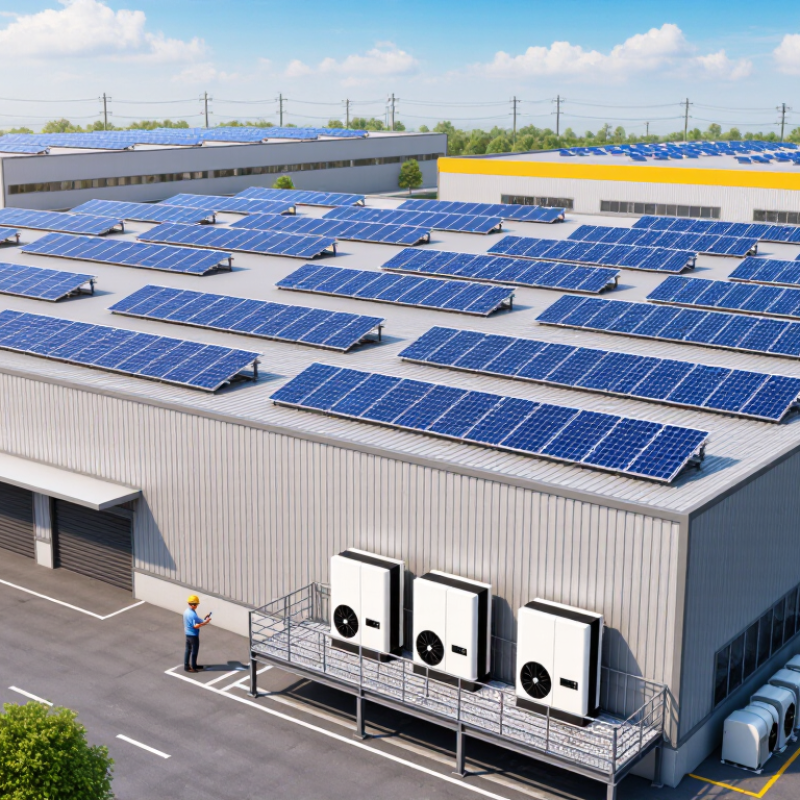
Start with measured site demand, not the inverter’s headline capacity. Review utility interval data across representative seasons, then compare peak kilowatts with daily energy use. A factory may draw modest power overnight, then surge when compressors and production lines start together. Motor starting current can exceed normal operating demand, so check equipment specifications and startup sequences. Small details matter.
Map the loads the inverter must serve and when they run. Separate essential circuits from flexible ones, such as office lighting or scheduled charging. If backup operation is required, estimate simultaneous demand and consider how long critical equipment must operate. Confirm whether the system will export power, charge batteries, or follow an export limit; each choice affects configuration and controls. Temperature, dust, ventilation, and available electrical space also shape practical capacity. A single utility bill is a weak sizing basis. It can hide short peaks and seasonal changes. I would verify assumptions with site measurements and an electrician, because operating schedules rarely match the neat spreadsheet.
How to Choose a C&I Inverter in 2026?
Choosing a commercial and industrial inverter starts with the site, not the product label. IEA PVPS reported 447 GW of new solar capacity worldwide in 2023; IRENA recorded about 1,419 GW of total installed solar capacity that year. These figures show a fast-growing market, but they do not identify the right inverter for a particular roof or factory.
String inverters suit sites with multiple roof areas or uneven shading, since arrays can be managed in smaller sections. Central inverters can simplify equipment layouts for large, uniform installations, though a fault may affect more capacity at once. Hybrid models may suit projects pairing solar with batteries. Fit matters. Compare inverter AC output with the site’s peak demand, utility service limits, and planned solar-array size—not annual energy use alone. Check DC voltage and current ranges, phase configuration, grid-control functions, battery communication, and monitoring compatibility. A mismatch can mean redesign or lost production. Often missed.
Ask for the assumptions behind each proposal: shading, temperature, expansion plans, and expected operating profile. Datasheets help, but they cannot predict every site condition. One uncomfortable detail: the lowest-cost option may look efficient on paper and still be awkward to service. A qualified designer should verify the final configuration against equipment documentation and site measurements.
A C&I inverter must match the utility’s grid code, not just its nameplate voltage. Check the required voltage and frequency ride-through, reactive-power control, anti-islanding behavior, and export limits. These settings can determine whether a site stays connected during a disturbance or trips offline. The IEA’s Renewables 2024 report projects nearly 5,500 GW of new renewable capacity by 2030, with solar PV accounting for almost 80% of the increase. More solar means more attention to how inverters support stable grid operation. Ask for current compliance certificates and test reports for the exact model and firmware. A generic datasheet is not enough.
Safety details deserve the same scrutiny. Look for documented testing, DC arc-fault protection where required, insulation monitoring, clear shutdown procedures, and accessible disconnects. Check how the enclosure handles dust, heat, and moisture at the actual installation site; a hot plant room is not a laboratory. Small details count. For resilience, confirm what the inverter can do during an outage. Grid-following equipment normally shuts down when the grid fails; backup operation may require storage, isolation equipment, and compatible controls. Ask whether the system supports intentional islanding or grid-forming operation, and request a single-line diagram showing the switching path. It is tempting to compare efficiency alone. I still find that easy to overvalue, especially when commissioning, firmware updates, and maintenance access are less visible on a quote.
Start by matching the inverter to the site’s nominal three-phase AC voltage, then confirm its grid-code settings and certifications for the installation location.
Example three-phase low-voltage nominal voltages (line-to-line). These are common system references, not a complete list or a substitute for checking the site supply. Before selecting an inverter, verify local grid-code requirements for voltage and frequency operating ranges, reactive-power control, and ride-through; also check applicable electrical safety certification and resilience features such as monitoring and fault response.
For a 2026 C&I inverter, monitoring should reveal more than a green status icon. Check whether the portal records energy, temperature, alarms, and downtime at useful intervals. Ask if your team can export raw data and receive alerts when communication drops. Small signals matter. A gradual rise in internal temperature, for example, may deserve inspection before a hot afternoon triggers a shutdown. I would not pretend every alert predicts failure; false alarms can waste time, too.
Maintenance support needs clear response times, diagnostic steps, and access to replacement parts. The U.S. Department of Energy’s Operations & Maintenance Best Practices guide reports predictive maintenance can reduce maintenance costs by 8–12% compared with preventive maintenance in industrial settings. That is useful context, not a PV-specific guarantee. Ask what remote troubleshooting includes, who handles site visits, and how firmware updates are tested. Get the answers in writing.
Long-term support is more than a warranty term. Confirm how service continues if the original installer changes, and whether key components remain available throughout the system’s planned life. Request a sample service report, including alarm history and corrective actions. Not a guarantee. But the way a provider explains an ordinary fault can show how practical its support will be when production is at stake.
Use this brand-neutral checklist to compare commercial and industrial inverter proposals. Confirm project-specific requirements against the applicable grid code, site conditions, and contract documents.
| Evaluation Dimension | What to Check | Evidence to Request | Practical Acceptance Check |
|---|---|---|---|
| Monitoring coverage | Visibility of inverter status, AC output, energy, alarms, and relevant operating measurements. Check whether monitoring is available at inverter and plant level. | Sample dashboard, data-point list, alarm list, and monitoring-system documentation. | Confirm that the operator can identify the affected inverter and review useful operating data without relying solely on a total-site energy figure. |
| Data access and integration | Supported interfaces and protocols, data export options, and connection to the site’s supervisory control or energy-management system. | Interface specification covering supported protocols, registers, data-update behavior, and any licensing or gateway requirements. | Verify protocol and point compatibility with the project design. Where Modbus is proposed, confirm whether Modbus TCP or Modbus RTU is supported and test required points during commissioning. |
| Alarm quality and response | Whether alarms describe the fault clearly, show its severity, and provide a recommended action or troubleshooting reference. | Alarm catalogue, example notifications, escalation process, and any contractual notification or response targets. | Review sample fault scenarios and agree response targets in the service contract; response times are not universal and should be defined for the project. |
| Remote access and cybersecurity | Access controls, user roles, authentication options, encryption, software-update process, and records of remote actions. | Security documentation describing account management, supported security controls, update handling, and audit logging. | Confirm that access can be limited by role and that the owner can manage accounts and credentials. Document who is permitted to make remote setting changes. |
| Maintenance requirements | Scheduled inspections, cleaning requirements, replaceable components, and any maintenance tasks requiring qualified personnel. | Installation and operation manuals, preventive-maintenance schedule, and recommended spare-parts list. | Compare maintenance tasks with site access, safety procedures, staffing, and service availability. Follow the manufacturer’s documented instructions. |
| Serviceability and repair | Fault-diagnosis process, field-replaceable parts, repair arrangements, and whether repairs require return to a service center. | Service procedure, parts list, warranty process, and written details of repair logistics and labor coverage. | Identify the likely repair path for common faults and include transport, labor, and replacement-part responsibilities in the project plan. |
| Environmental suitability | Operating-temperature range, altitude limits, humidity conditions, enclosure rating, and power derating under site conditions. | Product datasheet and installation manual, including derating curves and environmental limitations. | Check the specified site conditions against the documentation. An IP rating is defined by IEC 60529; confirm that the stated rating and installation method suit the actual exposure. |
| Grid-code and safety compliance | Compliance with the applicable local grid connection rules, protection functions, and relevant product safety requirements. | Certificates, test reports, and a compliance matrix identifying the standards and grid-code versions applicable to the project. | Have the project engineer or authority confirm applicability. Requirements vary by jurisdiction; do not rely on a generic claim of “grid-code compliant.” |
| Warranty terms | Warranty duration, start date, covered parts and labor, exclusions, claim procedure, and any extension options. | Full warranty document and written confirmation of the coverage offered for the project. | Compare the actual terms rather than warranty length alone. Confirm whether travel, removal, reinstallation, and shipping are included or excluded. |
| Long-term support and parts | Availability of technical support, firmware maintenance, replacement parts, and compatible replacements over the expected operating period. | Support policy, escalation contacts, parts-availability statement, and end-of-support or end-of-life notification process. | Request written commitments and clarify how the owner will be notified if support or parts availability changes. |
| Commissioning and handover | Commissioning tests, configuration records, monitoring setup, operator training, and delivery of system documentation. | Commissioning checklist, test records, as-built settings, monitoring credentials handover process, and training plan. | Make complete documentation and verified monitoring access part of the handover criteria. IEC 62446-1 provides documentation and commissioning guidance for PV systems, subject to project scope and local requirements. |
| Lifecycle cost and service plan | Expected costs beyond purchase, including monitoring subscriptions, communications, maintenance, service labor, and spare parts. | Itemized commercial proposal and service-cost schedule for the periods being compared. | Compare proposals over the same time horizon and assumptions; distinguish one-time costs from recurring charges. |
A low purchase price can hide costs that appear during installation and operation. Compare the full ownership cost over the expected service life, not just the quote. Include commissioning, monitoring subscriptions, replacement parts, labor, downtime, and likely efficiency losses. Ask suppliers to show the assumptions behind their energy-yield estimates. Small differences matter. A clear spreadsheet helps. Check warranty terms for exclusions, response times, and who pays shipping or onsite labor. For example, a five-year warranty may be less useful if repairs require costly travel.
Supplier credentials need more than a polished brochure. Request documented project references for systems with similar capacity, climate, and grid conditions. Verify certifications against current issuer records, and confirm the named company will provide service after installation. Ask how spare parts are stocked locally and what response time is realistic during peak season. Get the answers in writing. A factory audit can reveal useful details, but it cannot guarantee future support. Treat unusually optimistic savings forecasts cautiously; assumptions can be easy to miss. Even careful buyers miss something.
Start with the site, not the product label. Compare AC output with peak demand, utility limits, and planned array size. Annual energy use alone can mislead.
String inverters can suit separate roof sections or uneven shade. Central models may simplify large, uniform layouts, but one fault can affect more capacity. Hybrid models may fit solar-plus-battery projects.
Check DC voltage and current ranges, phase configuration, grid controls, and monitoring. Confirm battery communication if storage is planned. A mismatch can mean redesign. Often missed.
Request current certificates and test reports for the exact model and firmware. Check voltage and frequency ride-through, reactive-power control, anti-islanding behavior, and export limits. Generic datasheets are not enough.
Review shutdown steps, disconnect access, insulation monitoring, and required arc-fault protection. Check dust, heat, and moisture ratings against the actual location. A hot plant room is no laboratory.
Not automatically. Grid-following equipment usually shuts down when the grid fails. Backup may require storage, isolation equipment, compatible controls, and a clear switching diagram.
Look for energy, temperature, alarms, and downtime records. Ask about data exports and alerts for lost communication. A rising temperature may deserve a closer look, though alerts can be false.
Get response times, troubleshooting steps, replacement-part plans, and firmware procedures in writing. Ask who handles site visits if the installer changes. Efficiency is easy to overvalue; I still do sometimes.
One U.S. Department of Energy guide reports 8–12% lower maintenance costs in industrial settings. That is useful context, not a solar-specific promise. Not a guarantee.
Choosing a commercial and industrial inverter in 2026 starts with a clear understanding of the site. Assess available power, load profiles, operating schedules, and future expansion plans before comparing inverter types and capacity. Confirm that the inverter is compatible with the planned energy sources, storage equipment, and electrical system, so the complete installation can operate reliably and efficiently.
When considering how to choose inverter for commercial and industrial use, also review grid-code requirements, safety functions, and resilience features suited to the site. Compare monitoring tools, maintenance needs, warranty and support arrangements, and the expected availability of service over the system’s lifetime. Finally, look beyond the purchase price: evaluate installation, operation, maintenance, and replacement costs together, and verify that the supplier has relevant experience, dependable technical support, and clear product documentation. These steps help businesses select a solution that fits both their operational needs and long-term budget.

Sriram Electricals