In today's renewable energy landscape, understanding what affects the efficiency of an inverter is crucial for global buyers. Inverters play a key role in converting direct current (DC) to alternating current (AC), making them essential for solar energy systems. The efficiency of these devices can significantly influence energy output and cost-effectiveness.
Many factors contribute to inverter efficiency. These include temperature, load conditions, and quality of components. For instance, high temperatures can reduce an inverter's performance. Moreover, the design and technology behind inverters play a pivotal role. While some high-efficiency models exist, they may come with a higher price tag, raising questions about value versus efficiency.
Buyers must navigate these complexities. It's important to weigh reliability against cost and efficiency. Understanding what affects the efficiency of an inverter will empower buyers to make informed decisions. Ultimately, the choice of an inverter can have lasting impacts on energy savings and environmental sustainability.
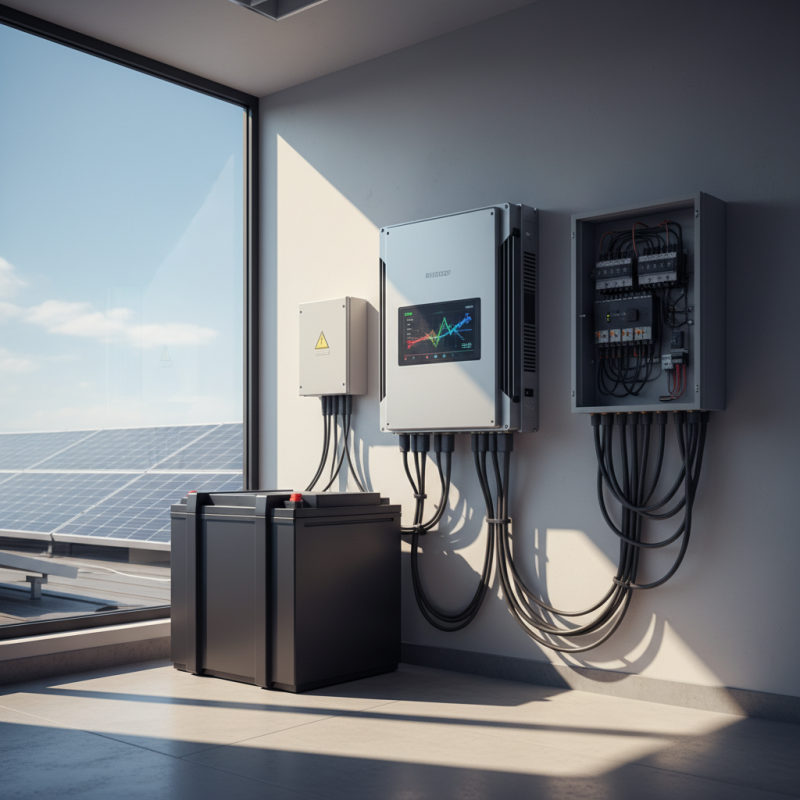
Inverters play a crucial role in converting DC power to AC, making their efficiency vital for energy systems. Factors influencing inverter efficiency can vary significantly by environment. For example, temperature is a key player. As temperatures rise, inverter efficiency can drop, often by more than 5% at extreme heat. Data from the National Renewable Energy Laboratory (NREL) highlights that in tropical climates, the efficiency losses can be even higher, necessitating better cooling solutions.
Humidity also affects performance. In humid environments, unwanted moisture can lead to corrosion, impacting inverter lifespan and efficiency. A report by the International Energy Agency (IEA) found that in regions with high humidity, maintenance of inverters needs to increase to preserve their operational efficiency. This concerns many global buyers who seek long-lasting reliability.
Another critical factor is the installation angle. Poor alignment with solar panels can reduce energy capture and overall inverter efficiency. Studies indicate that even a small misalignment of 5 degrees can lead to a 10% dip in energy output. Buyers are encouraged to consider local geographic features that may impact installation. Understanding these factors can help optimize inverter systems and improve their efficiency in varying environments, highlighting the need for tailored solutions.
Temperature plays a crucial role in inverter performance and efficiency.
Inverters operate optimally within a specific temperature range. Typically, this range is between
20°C to 30°C. Beyond these limits, efficiency can decline significantly.
A temperature increase of just 10°C can reduce inverter efficiency by 0.5% to 1%.
This means that in hot climates, users could experience substantial losses in energy conversion.
Reports indicate that inverter efficiency may drop below 90% in extreme temperatures.
For instance, at 45°C, inverter losses may exceed standard expectations. This decline affects not only energy yield
but also the overall return on investment for solar energy systems. It creates a need for cooling solutions in solar installations.
Many advanced inverters now include thermal management technologies, but these come with added complexity and cost.
Understanding the temperature impact is vital for global buyers. Inverter specifications often highlight optimal
operating conditions. However, real-world performance may differ significantly. Buyers must account for local climate
when selecting inverters. This ensures they choose systems that will meet their energy needs effectively over time.
Engaging with industry reports can provide insights into expected performance in specific conditions.
Load conditions play a significant role in determining inverter efficiency. Inverters convert direct current to alternating current, and their performance varies with the load applied. When an inverter operates under a light load, its efficiency can drop significantly. Many buyers may not realize this impact. Understanding load conditions helps in selecting the right inverter for specific needs.
Optimal efficiency often occurs under full load. However, in real-world applications, loads fluctuate. As a result, inverters frequently operate below optimal levels. This disparity can lead to inefficiencies. For example, a residential solar system might operate at varying loads throughout the day. Buyers should consider these factors when evaluating inverter options.
Monitoring your inverter's performance is essential. Situations arise where inverters are not performing as expected. It is crucial for users to consult manuals or seek professional advice to understand their inverters better. Buyers should reflect on their unique requirements. Awareness of load conditions can empower decisions that enhance efficiency and overall system reliability.
The quality of components used in inverters plays a crucial role in determining their efficiency.
High-grade materials often lead to better performance under various conditions.
For example, using premium capacitors can reduce energy loss during conversion.
This enhancement can lead to longer lifespan and stability.
In contrast, lower-quality components may introduce vulnerabilities.
These vulnerabilities can result in a higher failure rate under stress.
Inverters are complex devices. They rely on semiconductors for switching and controlling energy flow.
The efficiency of these semiconductors directly impacts the overall performance.
Inferior chips can cause unnecessary heat generation, which affects reliability.
Buyers often overlook the importance of thermal management.
Heat sinks and cooling systems, if poorly designed, can hinder inverter efficiency as well.
Beyond the components, assembly quality matters too.
A poorly constructed inverter may suffer from electrical shorts or disconnections.
These flaws can limit power output and increase operational risks.
Understanding the entire production process is vital for making informed decisions.
By focusing on these factors, buyers can make smarter choices that truly enhance efficiency.
Inverter efficiency plays a crucial role in energy conversion. The design and technology of an inverter can significantly impact how well it performs. Modern inverters include advanced features like maximum power point tracking (MPPT) and high-frequency switching. These improvements enhance efficiency but can also introduce complexities. Inverter design must balance performance with reliability, presenting challenges for manufacturers and users alike.
Tips for choosing an inverter include understanding the efficiency rating. A higher rating often correlates with better performance. Look for inverters that use high-quality components. This can lead to longer life spans and better efficiency during peak times. Additionally, consider the inverter's thermal management system. Overheating can hinder performance, so effective cooling solutions are essential.
Technology continues to evolve. Many inverters now feature smart capabilities and connectivity. However, incorporating too many features can detract from their fundamental purpose. Users should weigh the benefits of added technology against the potential for increased failure points. Making informed decisions about inverter design and technology will ultimately lead to better overall efficiency.
: Load conditions significantly impact inverter efficiency. Light loads can cause efficiency drops. It's important to understand these variations.
Optimal efficiency is achieved under full load. However, real-world applications often involve fluctuating loads.
Monitoring is crucial as inverters may not perform optimally. Consulting manuals or professionals can aid understanding.
High-quality components enhance inverter efficiency. Premium capacitors reduce energy loss and extend inverter lifespan.
Poor assembly can lead to electrical shorts or disconnections. This can limit power output and increase operational risks.
Focus on efficiency ratings and thermal management. High-quality components and effective cooling can improve performance.
MPPT is an advanced feature that optimizes energy conversion. It's beneficial but can add complexity to inverter design.
Weigh the benefits of smart capabilities against failure risks. Too many features may detract from essential inverter functions.
The efficiency of an inverter is influenced by several critical factors that global buyers should consider. What affects the efficiency of an inverter includes environmental conditions such as temperature, which can significantly alter performance levels. Inverters tend to perform optimally within specific temperature ranges; deviations can lead to reduced efficiency. Additionally, the load conditions under which an inverter operates play a vital role—varying loads can impact efficiency rates, requiring careful analysis of expected usage scenarios.
Moreover, the quality of components used in inverter construction also has a pronounced effect on overall efficiency. High-quality materials and components typically yield better performance and longer durability. Finally, the design and technology behind the inverter are crucial, as advanced designs can enhance efficiency through improved electrical management. By understanding these factors, buyers can make informed decisions to enhance inverter performance and efficiency in their specific applications.

Sriram Electricals