Choosing the right inverter is crucial for efficient energy use. When considering inverters, one often faces the dilemma of how to choose between single phase and three phase inverter options. Each type has unique advantages tailored for specific applications.
Single phase inverters work well in residential settings. They typically handle lower power loads effectively. On the other hand, three phase inverters excel in commercial and industrial environments. They support larger power demands and improve overall efficiency. Understanding these differences is vital for selecting the best fit for your needs.
Consider the specific requirements of your setup. Are you powering a small home or a large factory? This decision reflects not only on initial costs but also on long-term energy savings. Don’t forget about future expansion. Sometimes, your initial choice might need re-evaluation as your energy needs grow. The right inverter choice can enhance reliability and efficiency, making this decision significant.
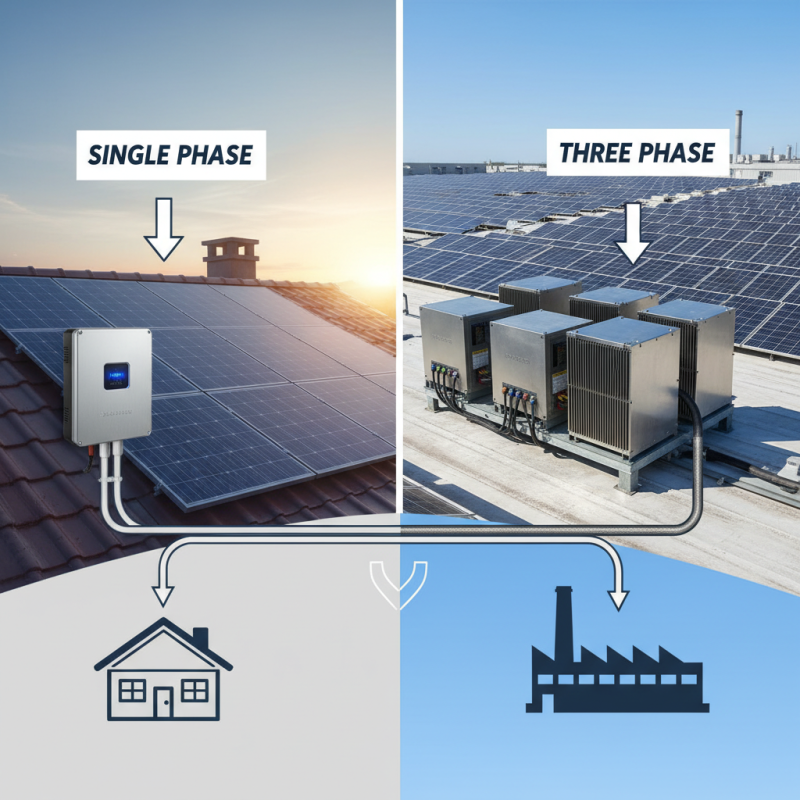
Choosing the right inverter type involves understanding your unique needs.
Single-phase inverters are suitable for smaller applications, like residential systems. These systems often require less power and are easier to install. A single-phase inverter typically has lower initial costs and is more user-friendly.
However, they might not handle high loads efficiently.
On the other hand, three-phase inverters cater to larger setups. They are ideal for businesses or farms needing substantial power. These inverters manage multiple loads seamlessly, offering reliability and efficiency.
They can balance the load distribution, reducing the risk of overload on any single phase.
However, three-phase systems can be more complex. They often require professional installation and have higher upfront costs.
It's essential to evaluate your energy needs accurately. Think about future expansions too. Will your needs grow?
Can a single-phase inverter handle additional equipment later? Reflecting on these questions will help you make a wiser choice.
Take time to weigh both options carefully. Finding the right fit ensures better performance over time.
: Three-phase inverters are more efficient, offering up to 30% cost savings on energy. They provide smoother power delivery, reducing voltage fluctuations.
Single-phase inverters work well for smaller applications. They are easier to install and typically cost less, making them suitable for most homes.
Assess your system’s total wattage requirements. Evaluate both current and future energy demands to ensure you make an informed choice.
Yes, they usually have a higher initial cost. It’s important to balance the upfront investment with potential long-term savings.
They offer enhanced load management, which is critical for running heavy equipment. This reduces the risk of outages in commercial settings.
Installation may be more complex, requiring additional wiring. This can increase overall project costs, so consider getting multiple quotes.
Look at your current energy consumption. Understanding usage patterns can help determine whether a single or three-phase inverter is the better fit.
If you plan to scale operations, a three-phase inverter could be a better long-term solution. Reflecting on this can prevent costly mistakes later.
Understand your specific energy needs and consider consulting with an energy professional for tailored advice.
One mistake is overestimating energy needs, which can lead to unnecessary costs. Always perform a thorough analysis.
When considering how to choose between single phase and three phase inverters, several key factors come into play. First, it's essential to understand the basic characteristics and applications of single phase inverters, which are typically used in residential settings due to their simplicity and cost-effectiveness. In contrast, three phase inverters excel in commercial applications, providing numerous benefits such as higher efficiency and better performance in larger setups.
A comparative analysis of efficiency and cost reveals that while three phase inverters may involve a higher initial investment, their long-term benefits often outweigh the costs, especially for larger installations. Ultimately, the suitability of each type of inverter hinges on the specific needs of the installation, whether residential or commercial. By weighing these factors, you can make an informed decision on how to choose between single phase and three phase inverters that best meets your energy requirements.

 Sriram Electricals